Pirates is a theme close to my heart. I have great memories as a kid of dressing up as pirates with my brother and having such a laugh during our imaginative play games. This is another topic that could be adapted and built upon to be used within a nursery or primary school setting, even stretching into older years looking into modern-day piracy, ethics and codes of conduct within and out-with the school. Below I have added my planning mind map and detailed the activities we did.
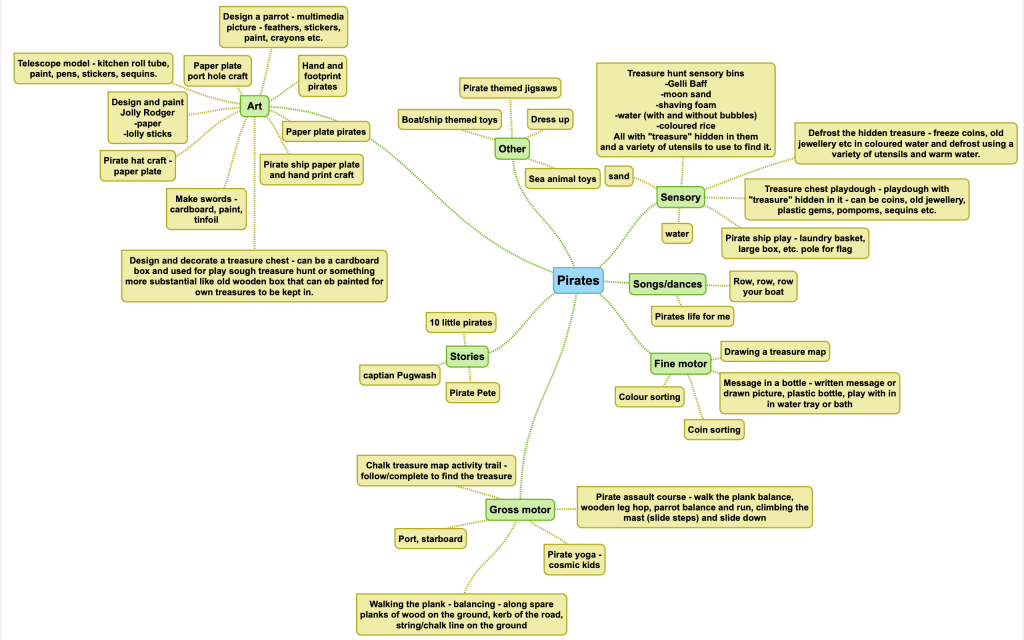
Pirates Planning mind map.
Pirate Hand/foot print pictures – resources: pens, paper, googly eyes.

First, we drew around Robbie’s hands and feet, then coloured the fingers/toes to resemble trousers, drew on a bandana and pirate hats and coloured them in. Finally, we stuck on googly eyes with Pritt-stick.
Robbie had never had his hands or feet drawn round before so we had lots of fun experimenting with this, using different pens and talking about how it felt.
Pirate Island Sand and Water play – resources: assorted toys – play people and boats, filled sand and water tray (alternatively large bowls or buckets with play sand and water in them – you can make edible sand by putting breakfast cereal into a food processor if you do not have play sand or want your activity to be edible)
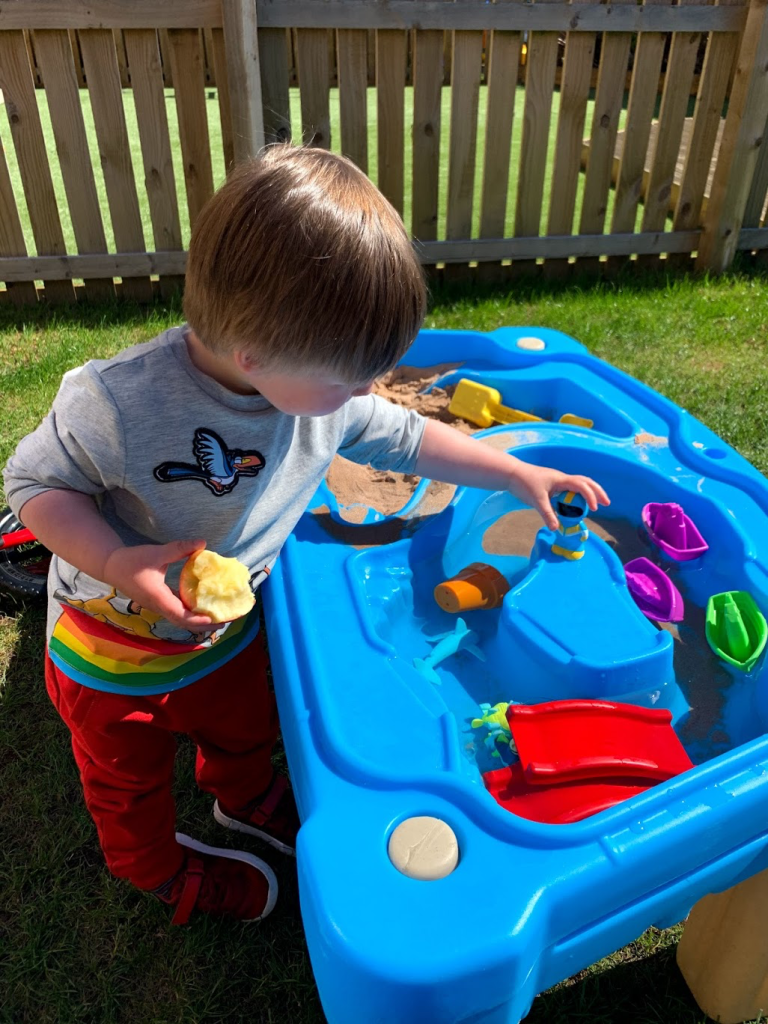
We had lots of fun dreaming up different imaginative play scenarios with our “pirates” on their “Treasure Island”. We also used the sand to burry some “treasure” in which Robbie then needed to dig up and find with his toy “pirate” which was a great sensory activity.
We didn’t have any specific pirate toys, so just used any human type toy we had including Lego/Duplo men and a racer/astronaut man.
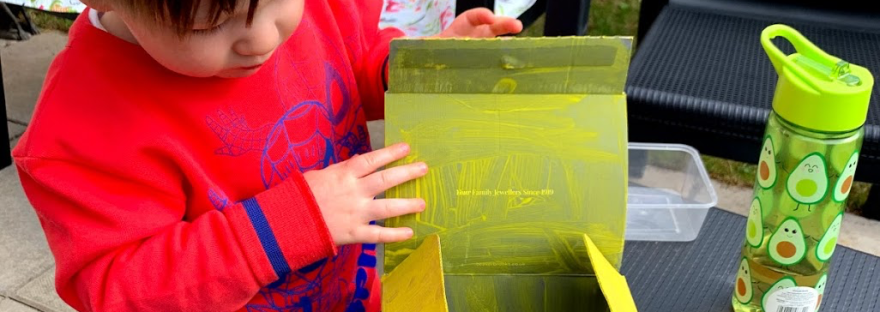
Pirate Treasure Chest craft – resources: old cardboard box (small amazon box is perfect), yellow/brown paint, stickers, sequins, feathers, pompoms, glue.
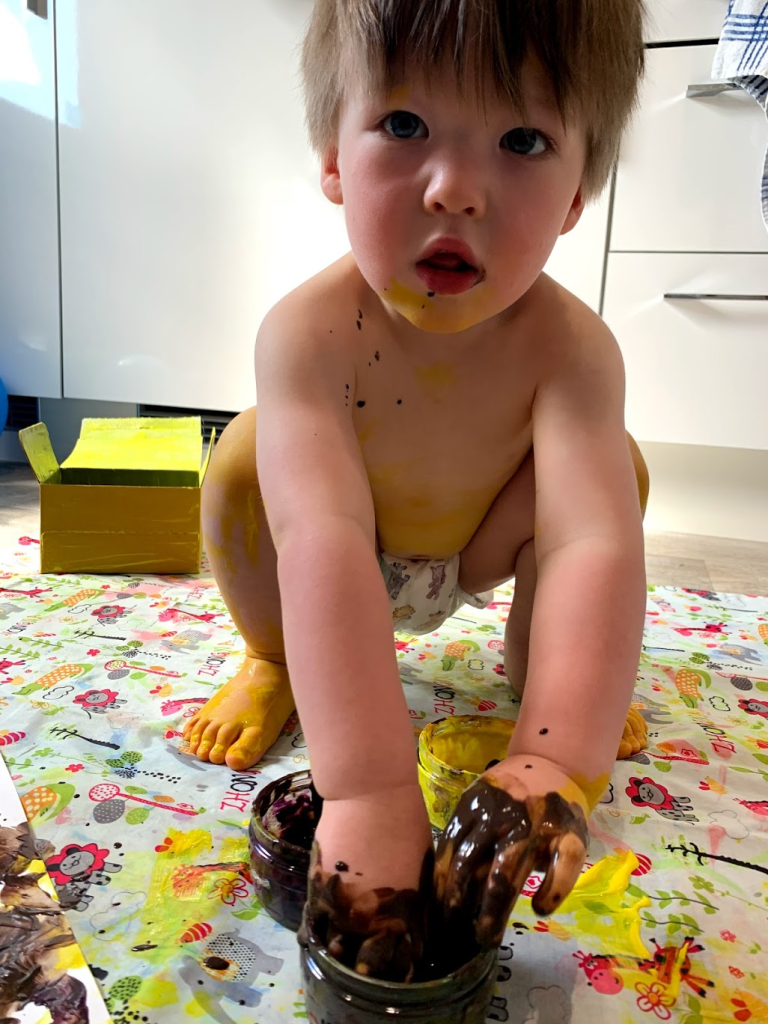

We simply painted our cardboard box yellow, then stuck sequins, shiny sticker and pompoms on with Pritt-stick once it was dry. This was great as once it was completed it gave us a brilliant resource for other activities, such as a feely box, sensory box and filing and emptying activities.
As you can see from the picture Robbie helped to paint by mostly painting himself so Mummy ended up doing most of the box painting. Robbie loves to get messy when we are painting which is why I always tend to strip him and let him paint naked as then it doesn’t matter where the paint goes.
Pirate Parrot Picture – resources: plain paper, pens, colourful stickers, pompoms, feathers, googly eyes.
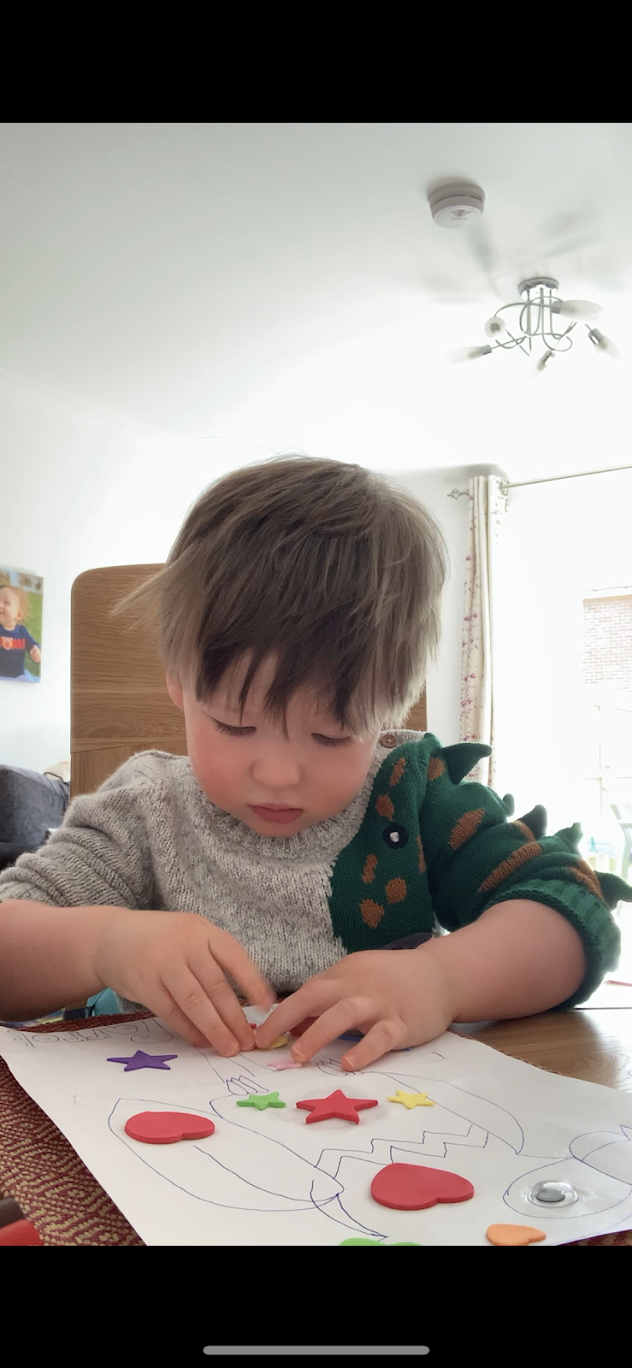
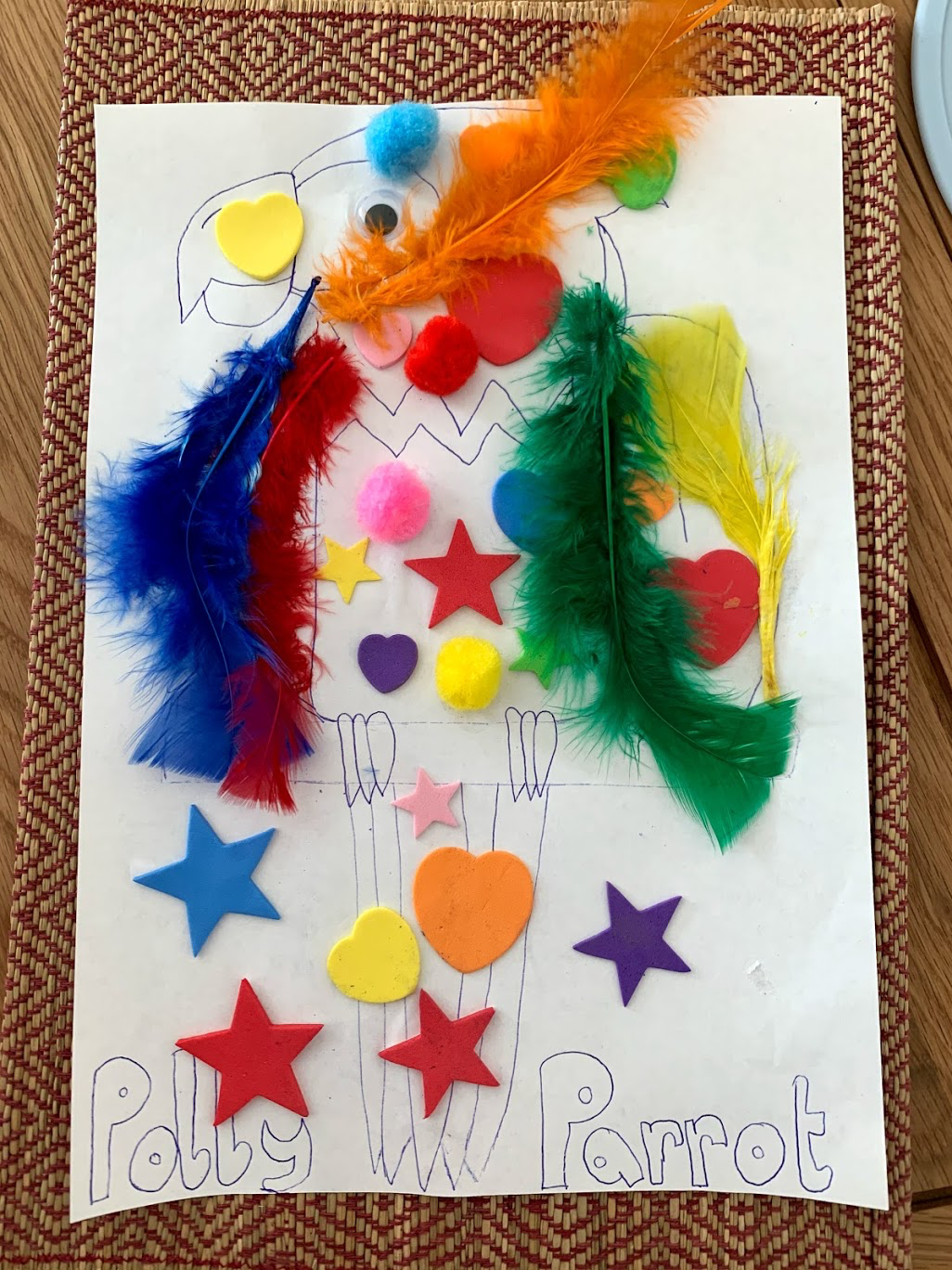
This was a great multimedia, sensory picture. I drew the parrot outline on plain paper (hand-drawn from an image on google). We then took our time thinking about what colours we should use and what materials would be good to make our parrot picture. We looked at pictures of parrots from Goggle images for some inspiration before starting and referred back to them during the activity. We also talked about the sound parrots makes and how they can “talk”, asking our Amazon Alexa to play the parrot sound and watching videos on YouTube.
To improve this picture I would get Robbie to colour in the parrot picture before we start sticking the materials on so that it stands out a bit more. You could also use coloured tissue paper or painted plain paper cut up into small pieces to create a collage parrot.
Sensory Buried Treasure – resources: assorted pieces of costume jewellery, coins, old keys, badges, toy money etc., various messy play materials (shaving foam, sand, rice, water, moon sand, Gelli Baff, gloop etc.), assorted utensils – spoons, tongs, cups etc.
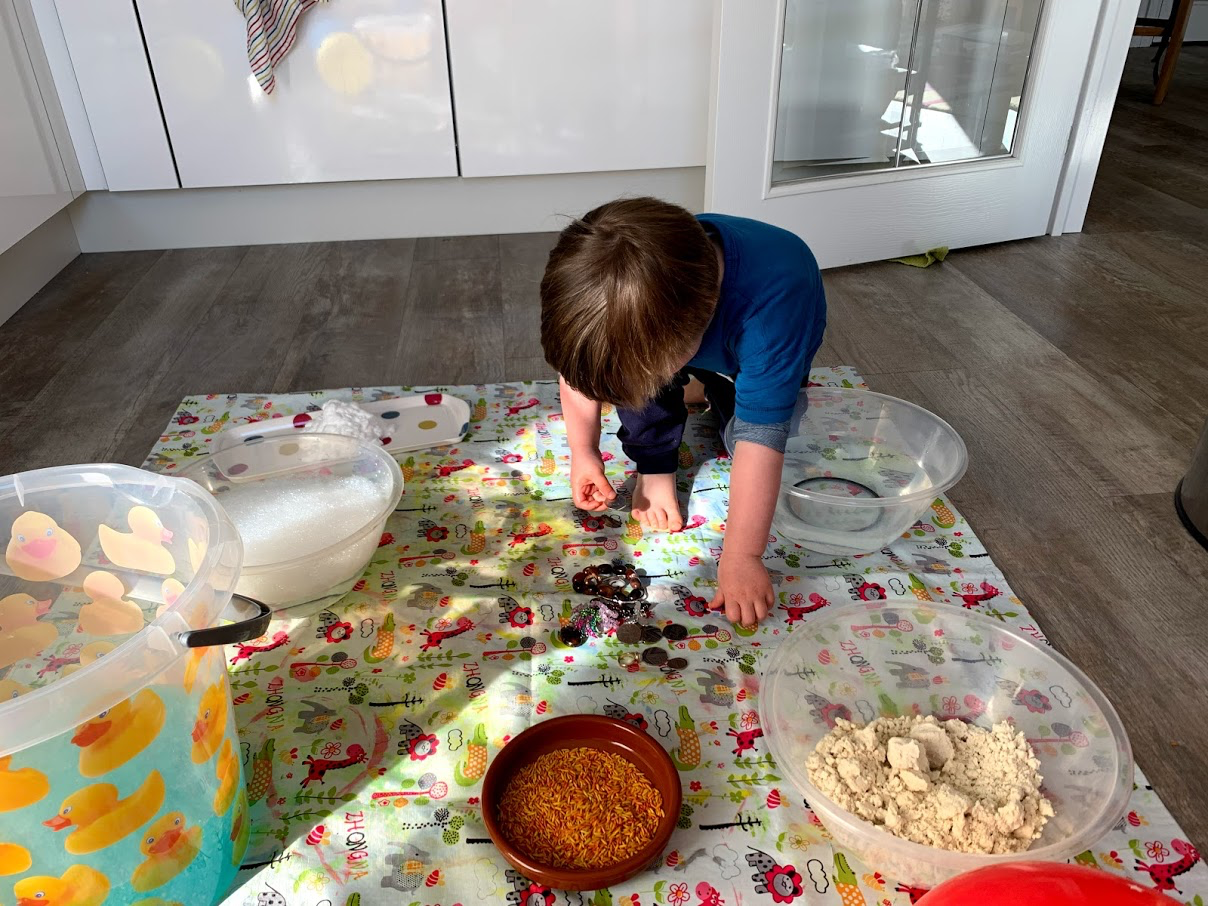
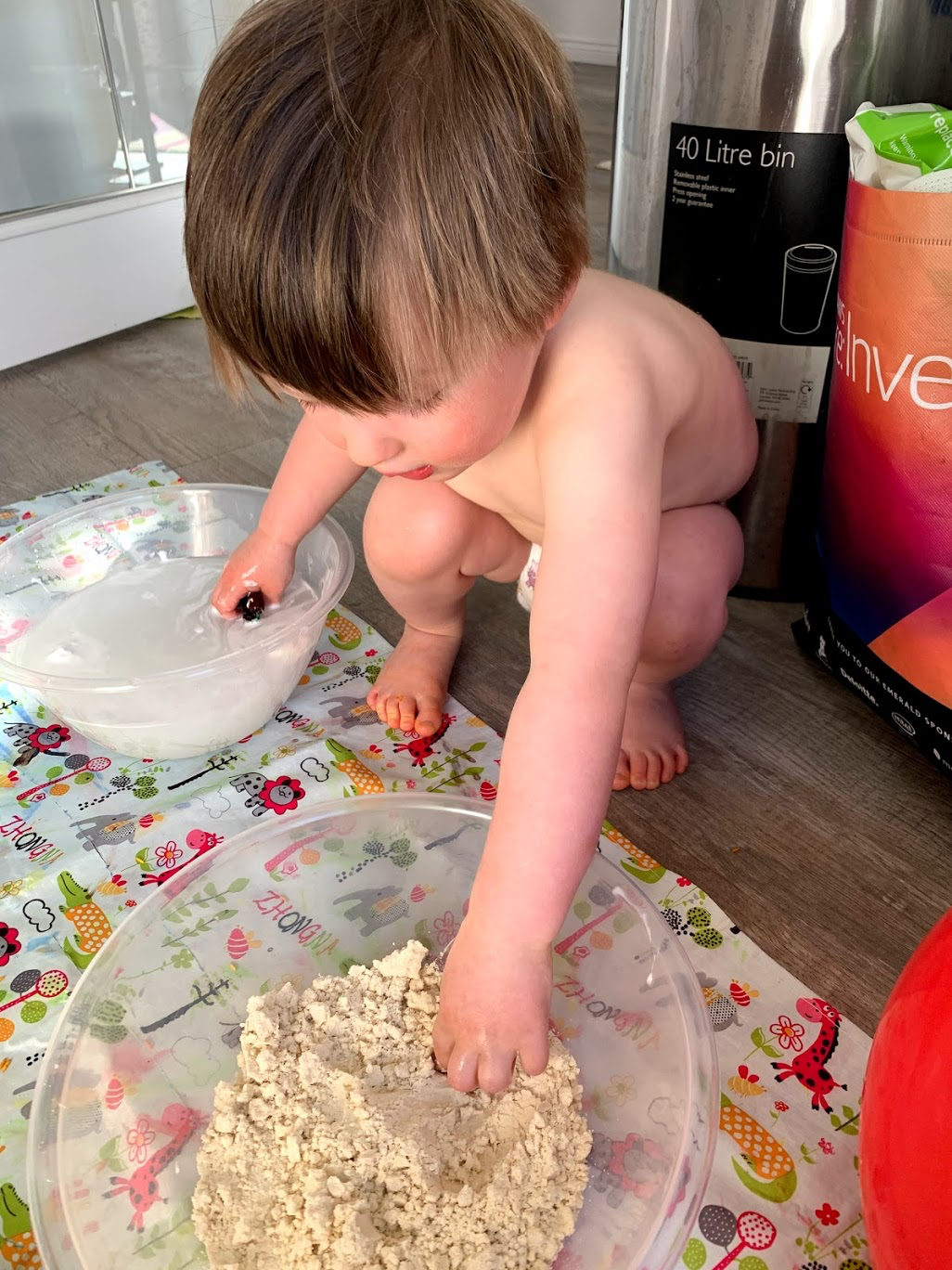
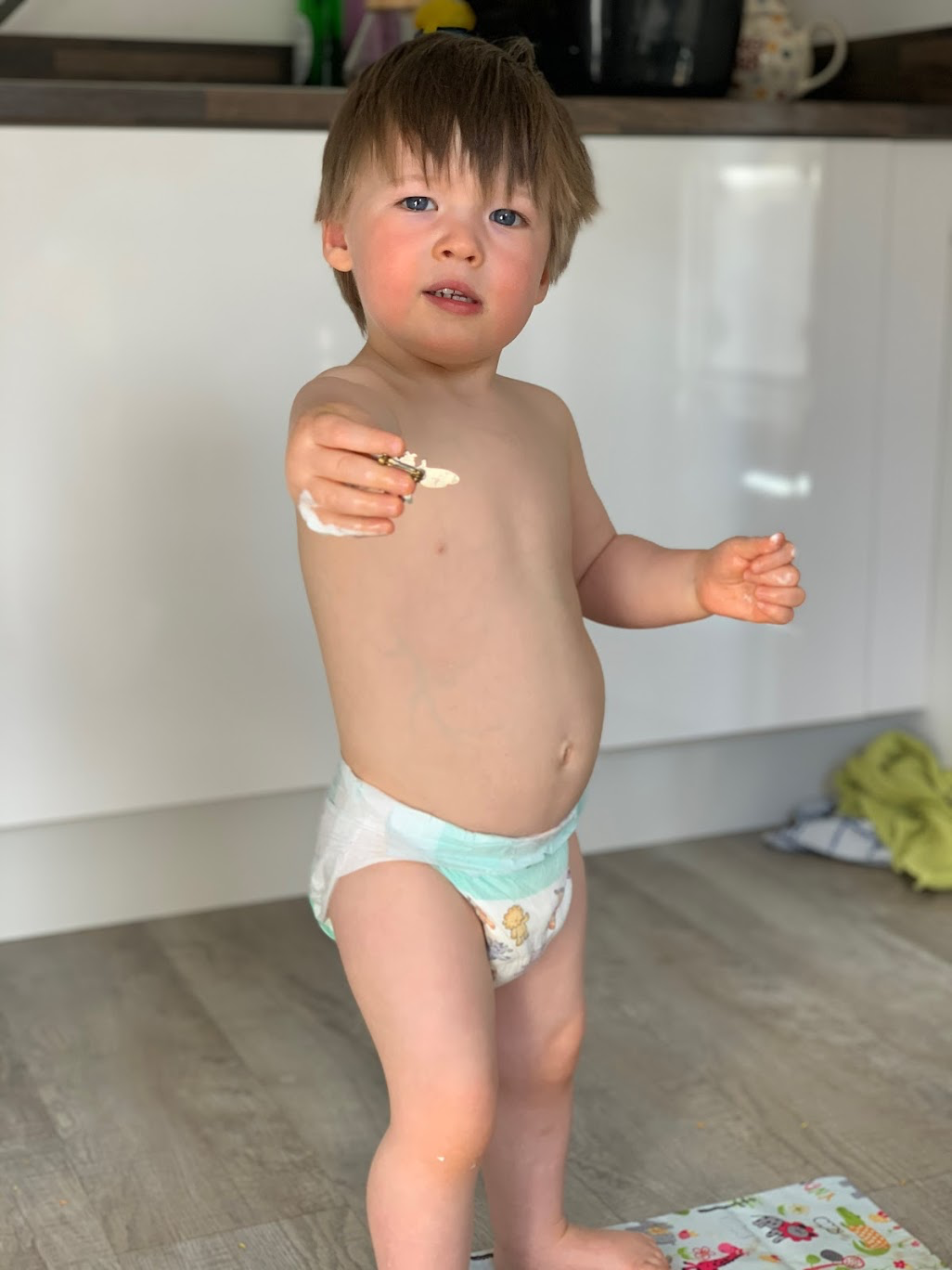
I set this activity up while Robbie was napping so it was a surprise when he woke up which got him really interested and excited to take part.
In previous weeks themes, I had made moon sand and coloured rice which I put in containers and used for this activity. I also put shaving foam on a tray, mixed up some Gelli Baff and filled some large bowls with water and bubble bath. I then hid some “treasure’ in each of these for Robbie to find.
Once he had found everything he hid some for me to find. We took it in turns hiding treasure and finding it.
I always put out some utensils for Robbie to use during messy play as he doesn’t always want to put his hands in or get them dirty but is usually happy to use spoons, tongs etc instead.
Sensory Treasure Box – resources: box (we used the cardboard box we painted earlier in the week, but you could easily use a plain cardboard box or Tupperware box), yellow play dough, assorted pieces of costume jewellery, coins, old keys, badges, toy money etc.
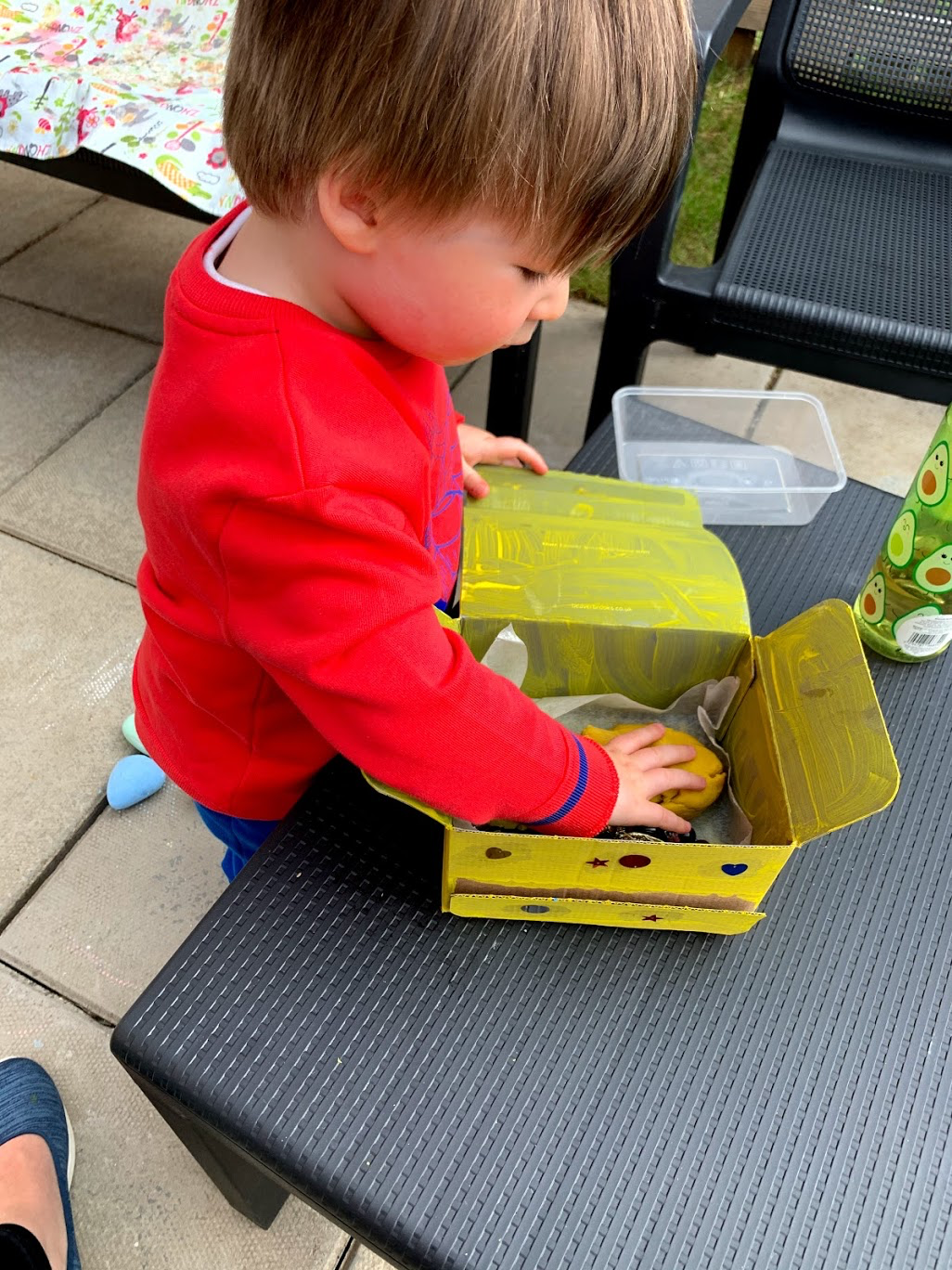
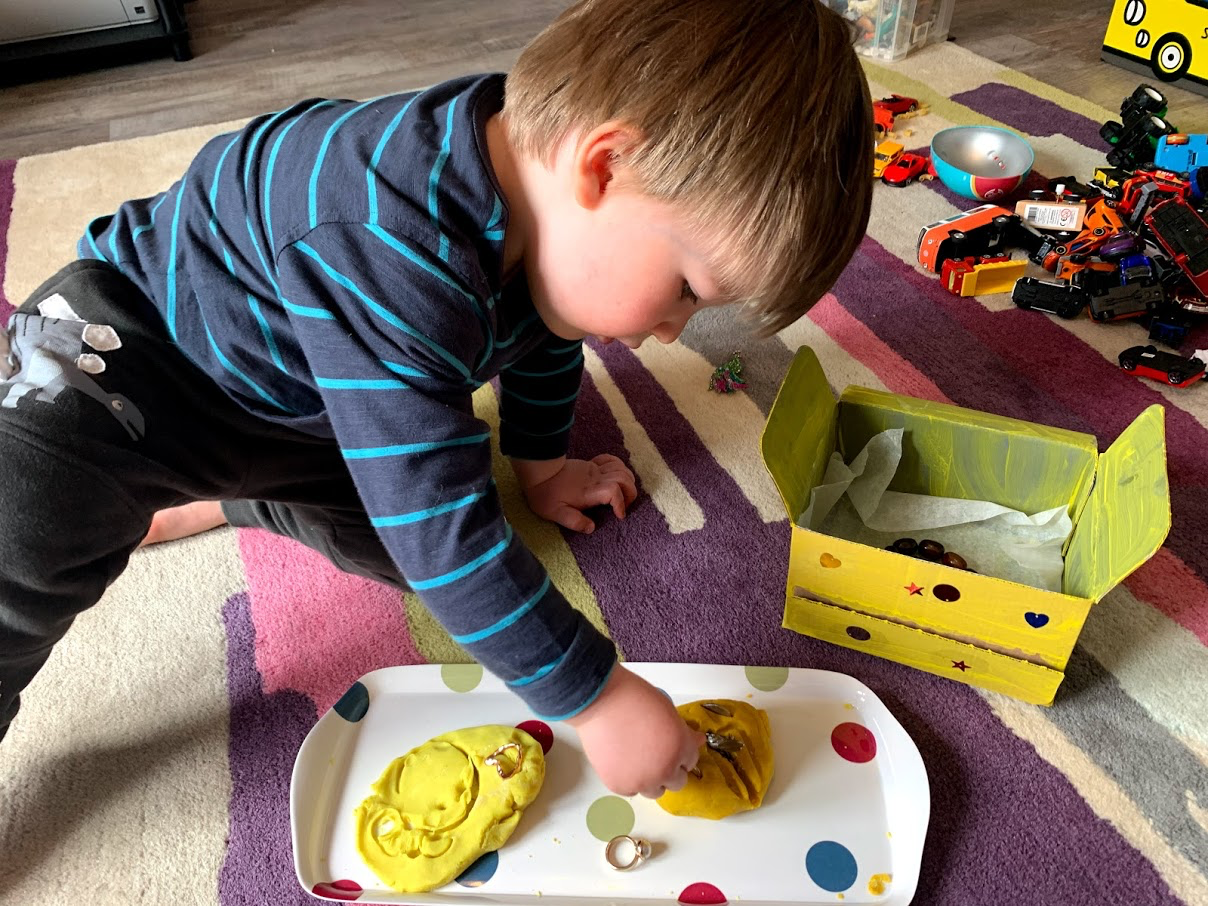
I used the treasure chest we made earlier in the week to hold the play dough and “treasure” which really sparked Robbie’s interest in this activity. We used the play dough to stamp the treasure into, exposing all the different shapes and patterns they made and made our own tiny islands and treasure pieces with the play dough.
Chalk Pirate Treasure Map – resources: outdoor chalk, paving slabs, treasure chest and “treasure”, a treat snack.

I drew a treasure map on our back garden slabs using our outdoor chalk for Robbie to follow and find the buried treasure with his toy “pirates”. We talked about the different obstacles that the pirates might have to face and why they would be on the map before adding them into our map. Each obstacle had a different way to overcome it – such as star jumps or spinning round or hopping or blowing bubbles. This was a great opportunity to talk about not giving up and trying even when things are difficult.

 Thumbs & Crumbs