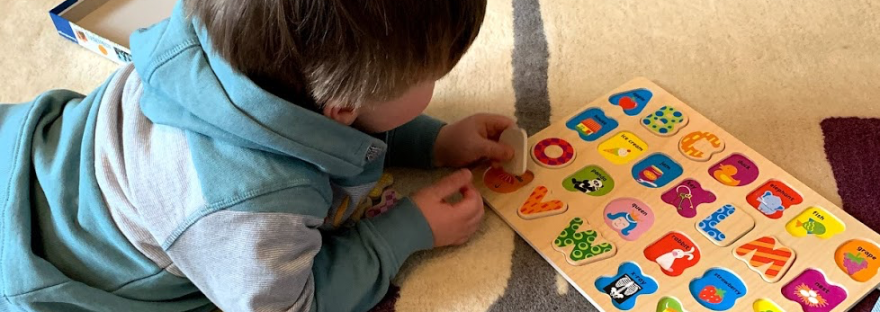
Robbie loves learning and is really interested in letters and numbers in particular. we constantly talk about letters, numbers, colours and shapes and always sing songs and read stories about them.

Painting
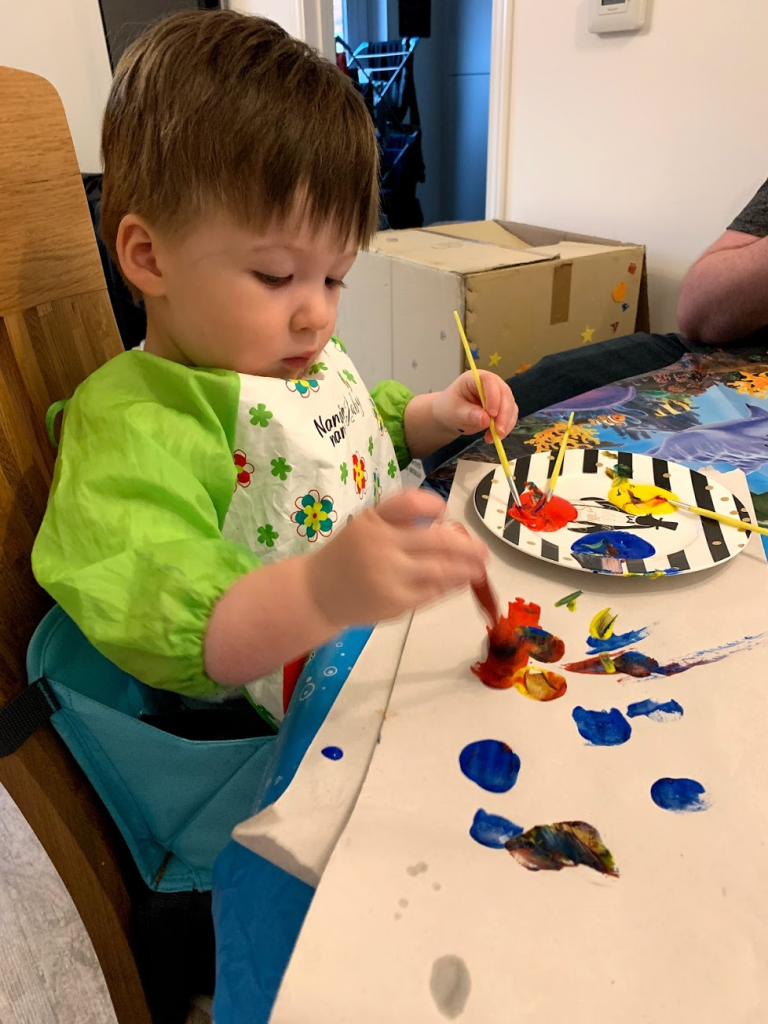
Painting is a fun way to learn. When we paint we talk about the colours that we have, we mix colours and talk about what colour we think they will make, then talk about what colour they did make. We make dots or pictures and count them, we paint numbers and letters, we give our painting a story and talk through it while watching mummy write it down. We also explore different marks, patterns, shapes, animals etc. through using different materials when painting.
Colouring in
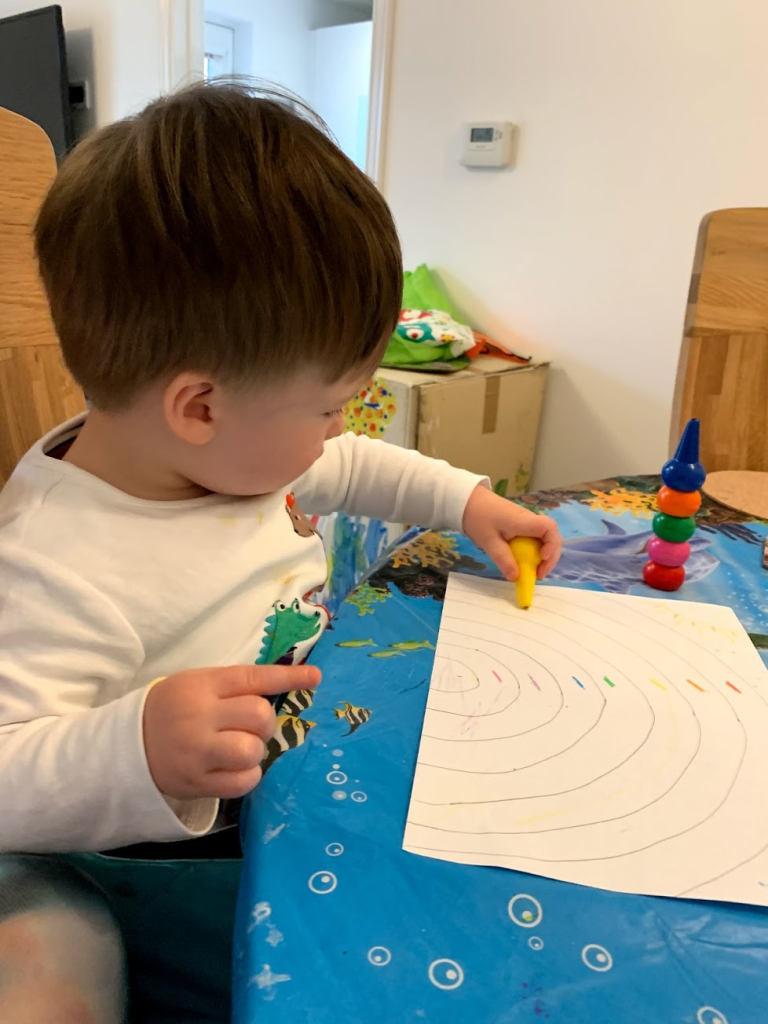
Colouring and drawing pictures using different materials is another good way to explore and develop knowledge of shape, colour, numbers and letters. When we do drawing or colouring we always have lots of different coloured pens, crayons, stamps and stickers out for Robbie to use freely. We always talk about what colour he is using or what colour would be best for a certain part of his picture. I always encourage him to ask for the coloured pen/crayon if he can’t reach, rather than just pointing for it.
Blocks (Duplo, Lego, Soft Blocks etc.)
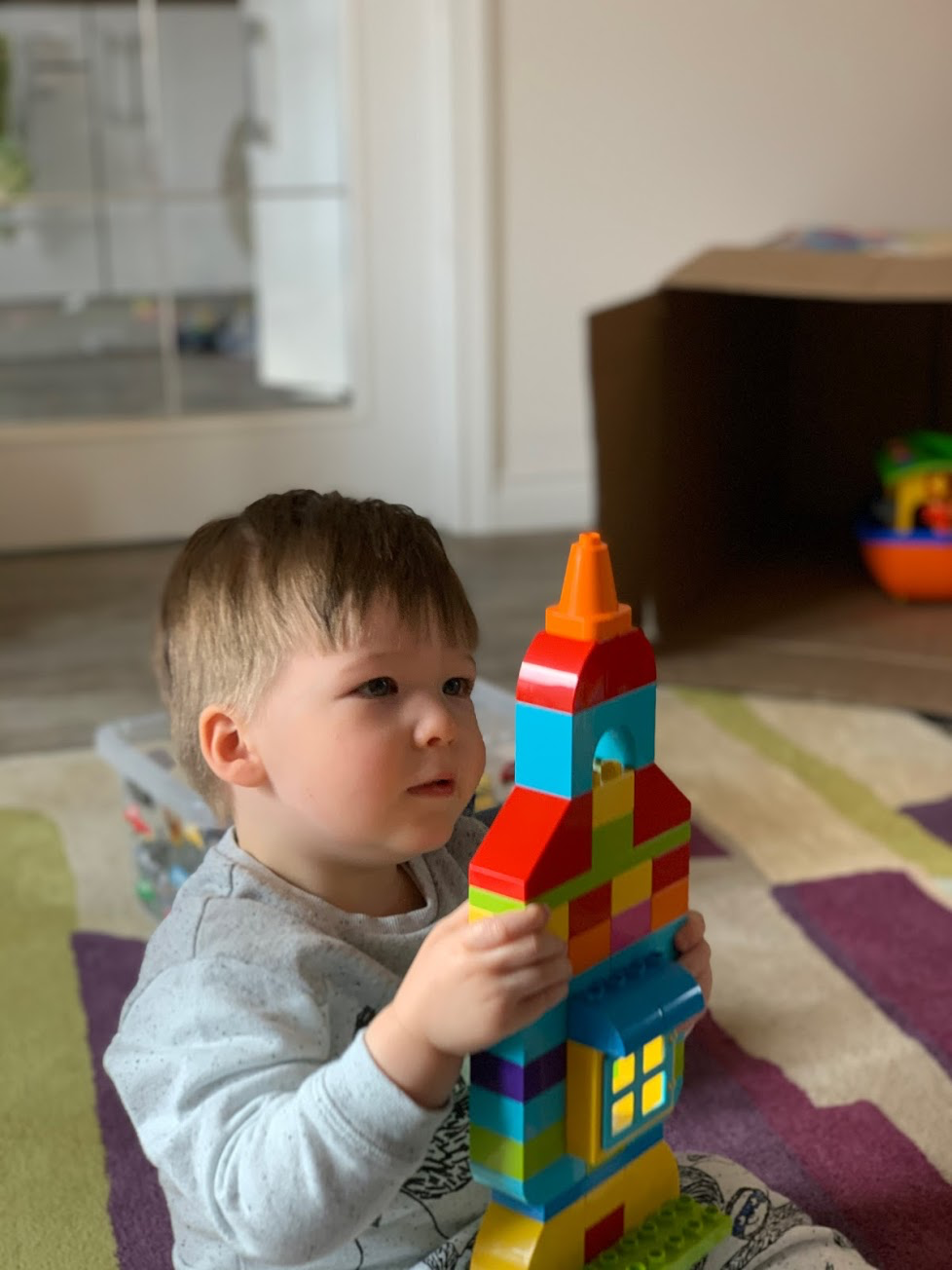
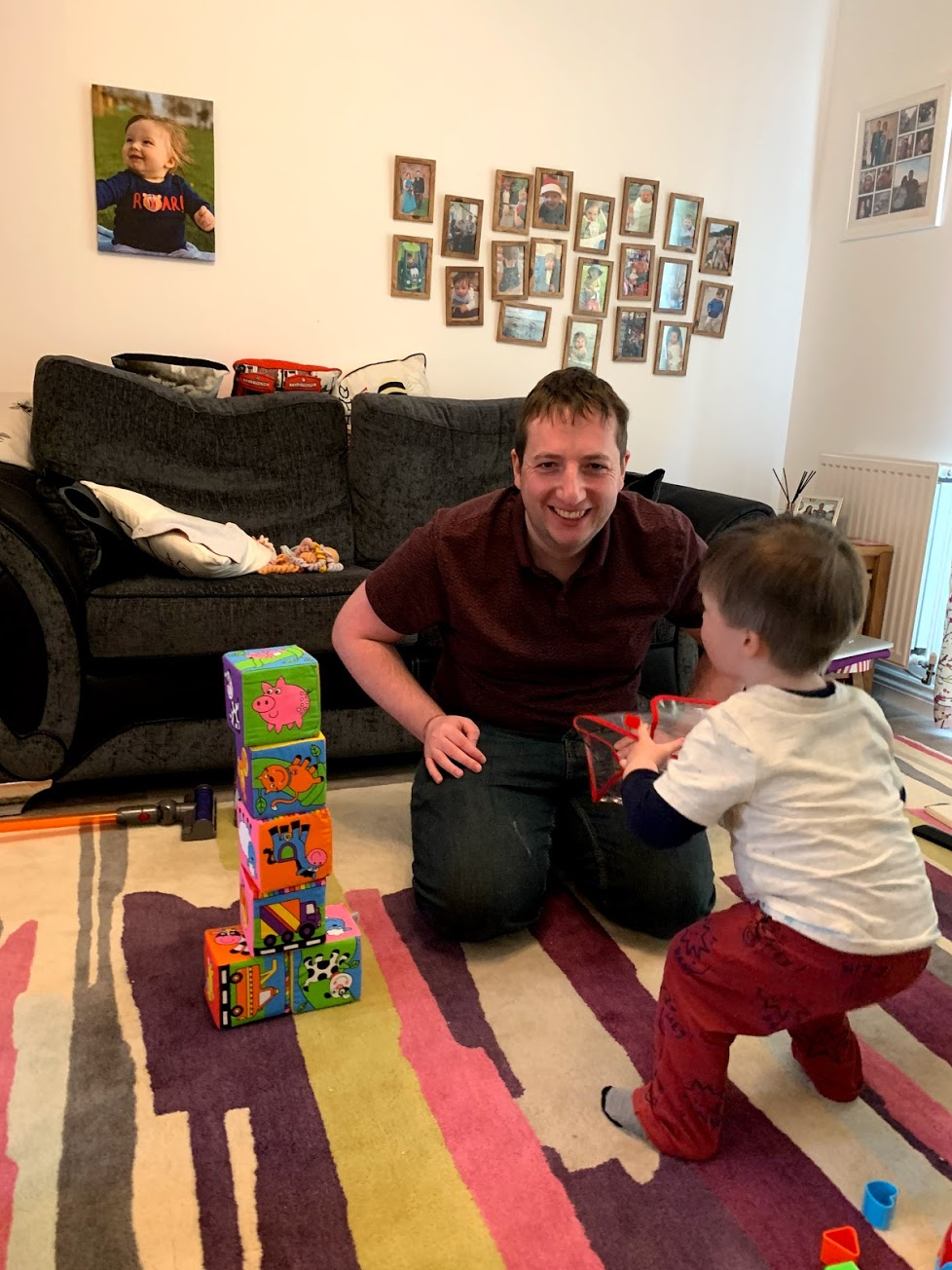
Blocks are another great source of learning. When we play with blocks we mostly make rockets or cars which always involve doing countdowns to a blastoff or the start of a race. We also count the number of blocks we use for our models, talk about the shapes they make and what colours they are. We like to have competitions to see who can build the tallest tower or who can use the most (e.g.red) blocks. We guess how many blocks we need to build a train using all our sets of wheels then count and see if we are right. A lot of these guessing/prediction how many games are a little abstract for Robbie at 2, so the answers he gives aren’t a true estimated guess, but it is teaching him about the process of estimating and checking as well as allowing him to develop his spacial awareness and his concept of quantity.
We also like to build Humpty Dumpty and his wall which we use as a great way to look at patterns, making sure each level of the wall follows a different pattern, predicting what block we will use next and discussing it the whole time. We also obviously sing the Humpty Dumpty song many many times. Repetition is massively important for learning, especially at a young age.
Count Everything
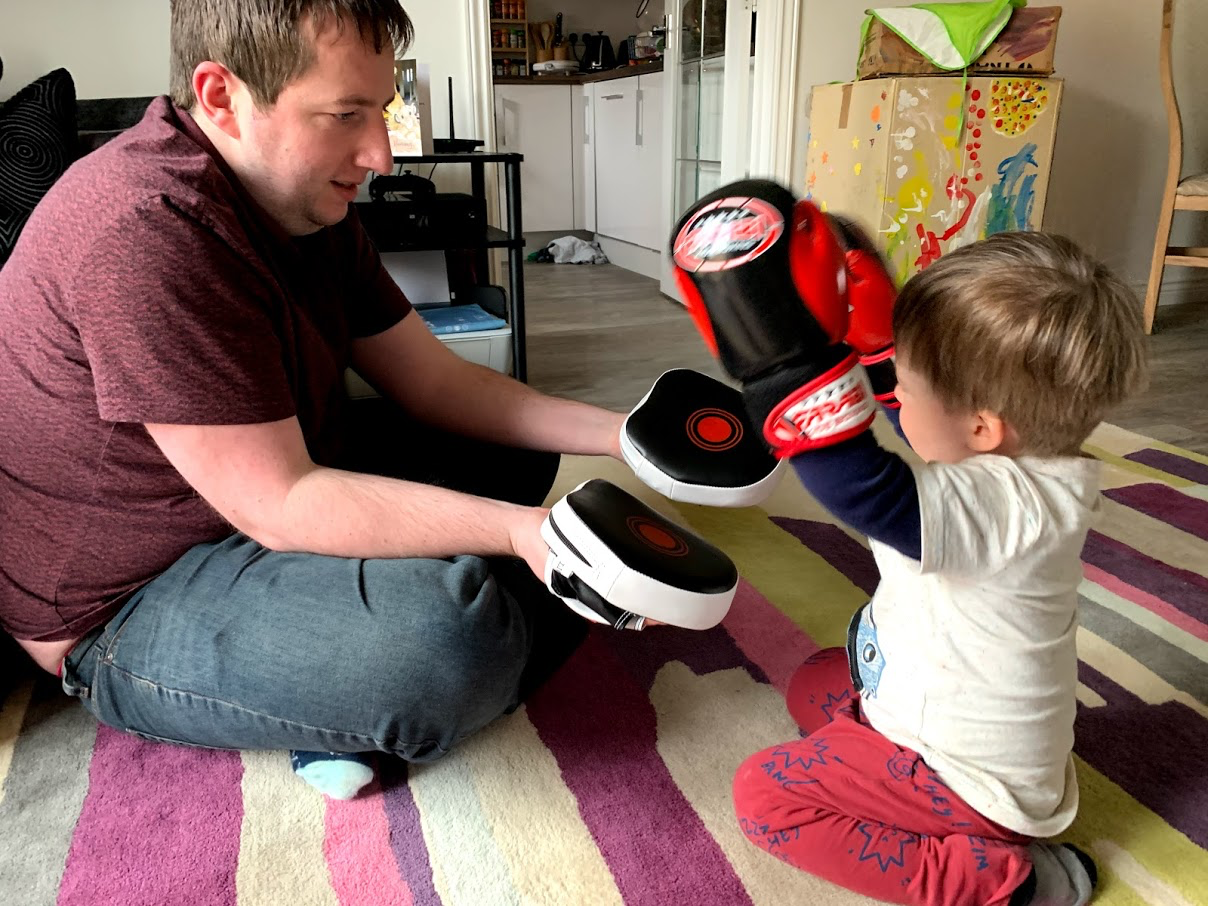

We count everything: stickers on our pictures, stairs, jumps in a puddle, cars we are playing with, spoonfuls of dinner, punches Mummy and Daddy do in Boxercise etc. Robbie loves counting and gets a real thrill from being able to count things accurately so we just run with it and count everything possible. It’s total immersion for him which is brilliant.
We sometimes take this further by building a few sandcastles, for example, and count them, then as we build one more Robbie tells me how many there are now, then we build another and he counts them again. Once we have built all the castles we have a naughty dinosaur that comes along and stamps them over and we count how many he stamps and guess how many are left then check. This is a great fun introduction to the concepts of addition and subtraction.
Numbers everywhere

Numbers are Robbie’s first love when it comes to learning. He sees numbers everywhere and gets so excited by them. When we are out on our walk we like to play a number hunt. We find numbers on doors, buses, number plates, prices in shops, on the scales when baking, speed limit signs etc. We always talk about what number the digits make, what might come before and what comes after.
Sharing

Robbie has recently started sharing his snack and play food out between people at the table or his toys. This has been completely driven by him and he has been very good at sharing things one at a time so each person gets a fair share. We talk about sharing a lot at home, when he’s going to nursery and when we have playdates, explaining that it is kind and that other children will share with him too.
Reading Stories
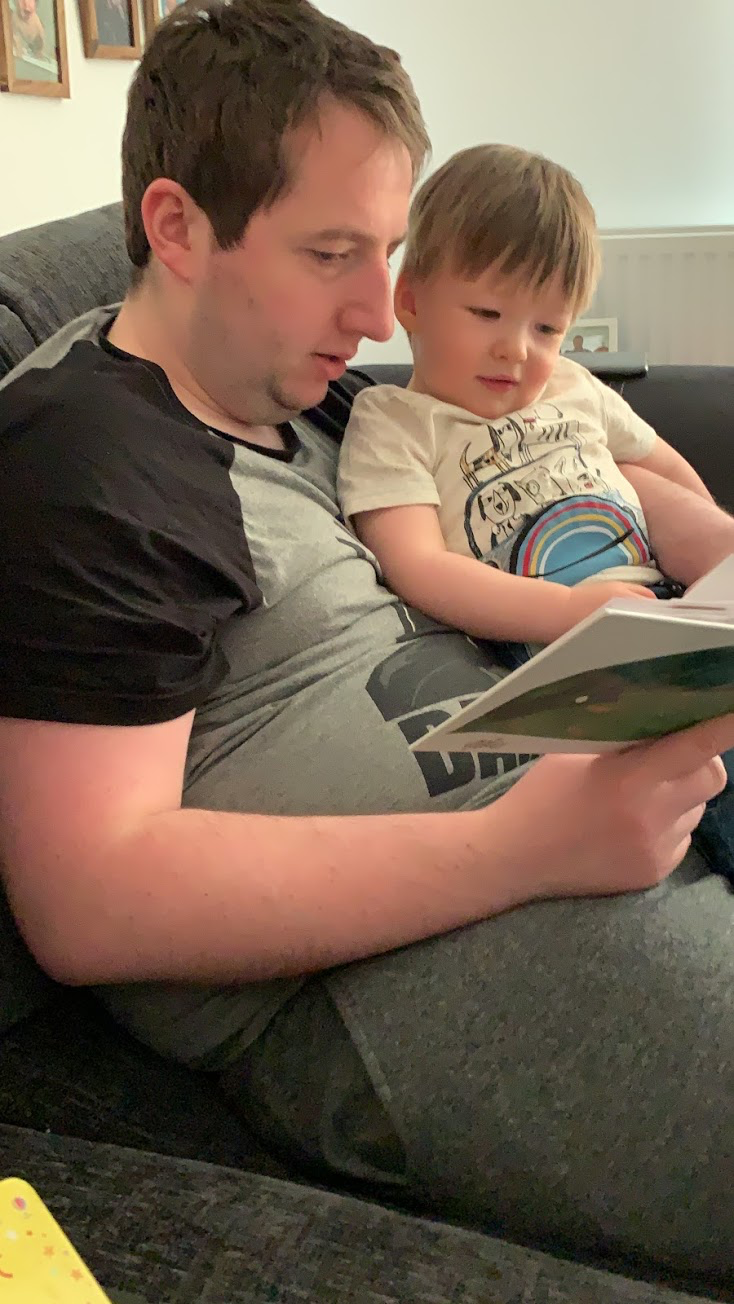
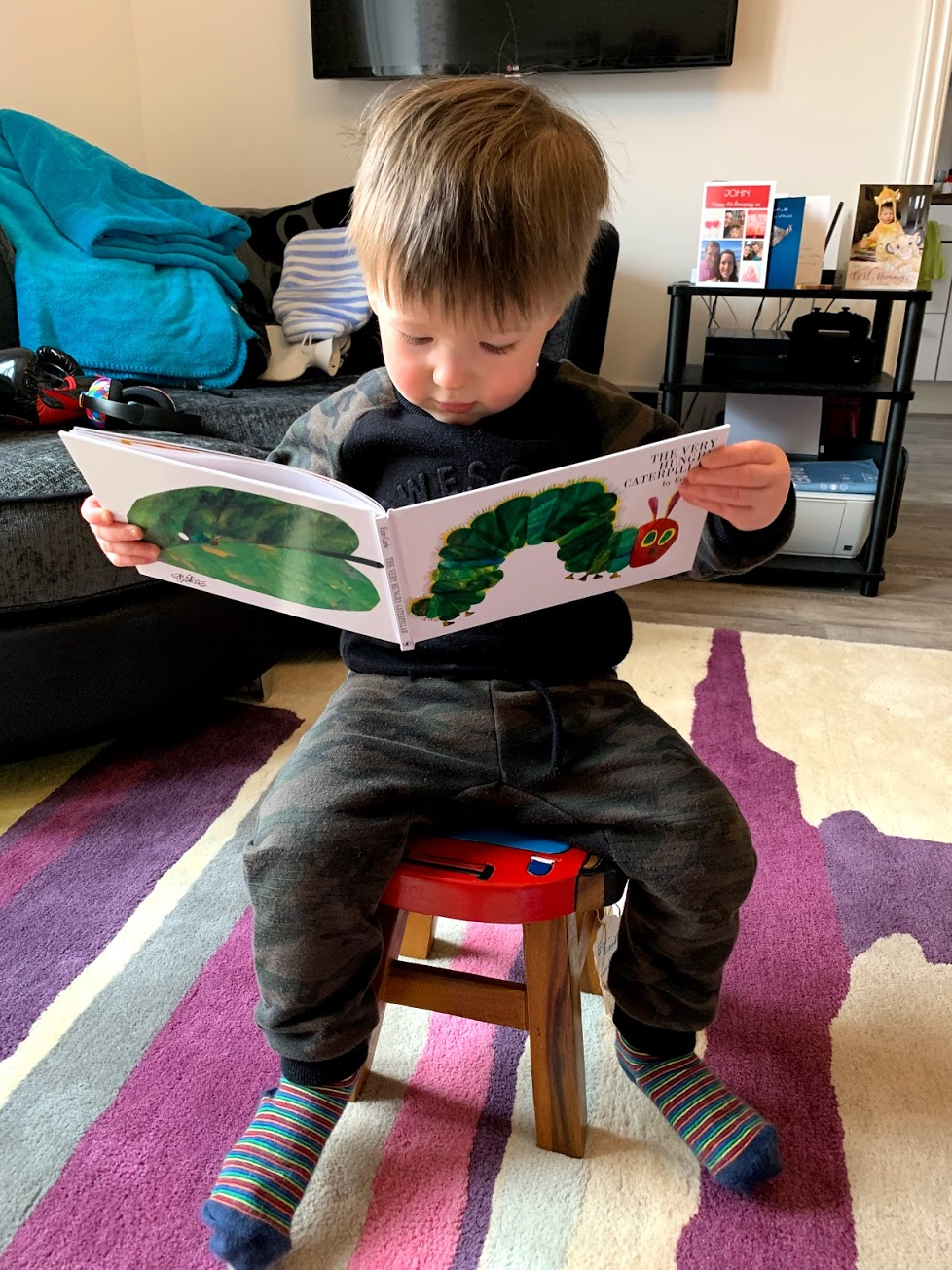
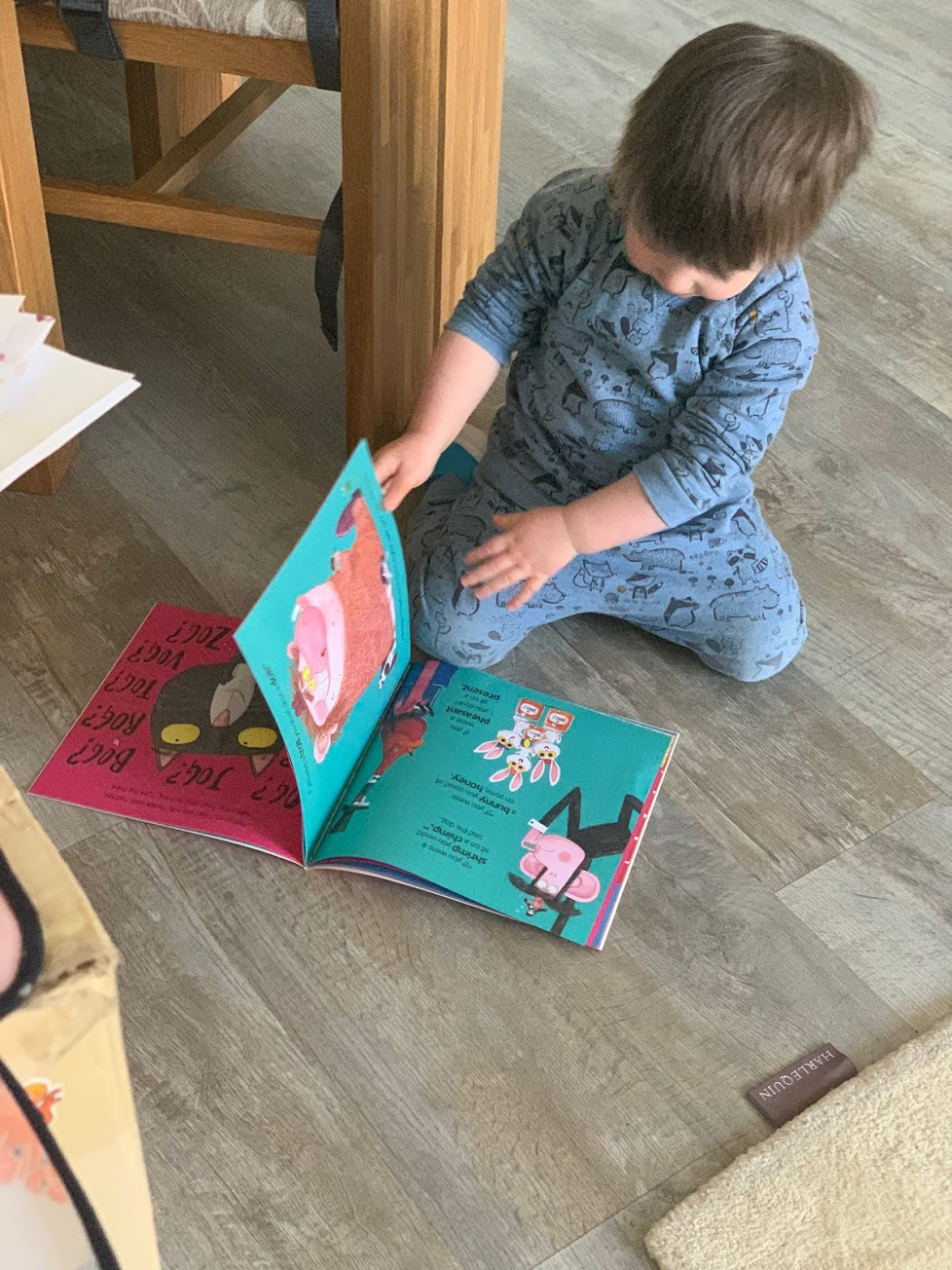
Reading books is one of the best things you can do together. You bond, develop your child’s imagination and teach them valuable skills and knowledge that they will apply throughout their lives. I always say there’s no such thing as too many books and you can never read them too many times. Repetition helps little ones learn words and concepts so reading a favourite story 20 times a day is a brilliant learning experience. We like to talk about the Author and Illustrator and what their jobs are. We talk about what we can see on the front cover and what we think the book will be about. We look at the Blurb on the back of the book and read it to find out a little bit about the book before reading it. We talk about what we think will happen next and how the characters are feeling while reading. Afterwards, we talk about what might have happened differently or what might happen after the story has finished. As Robbie is only 2 a lot of this chat is lead by me, but it is exposing him to critical thinking about stories and develops his imagination and understanding of how stories work.
Finding Letters
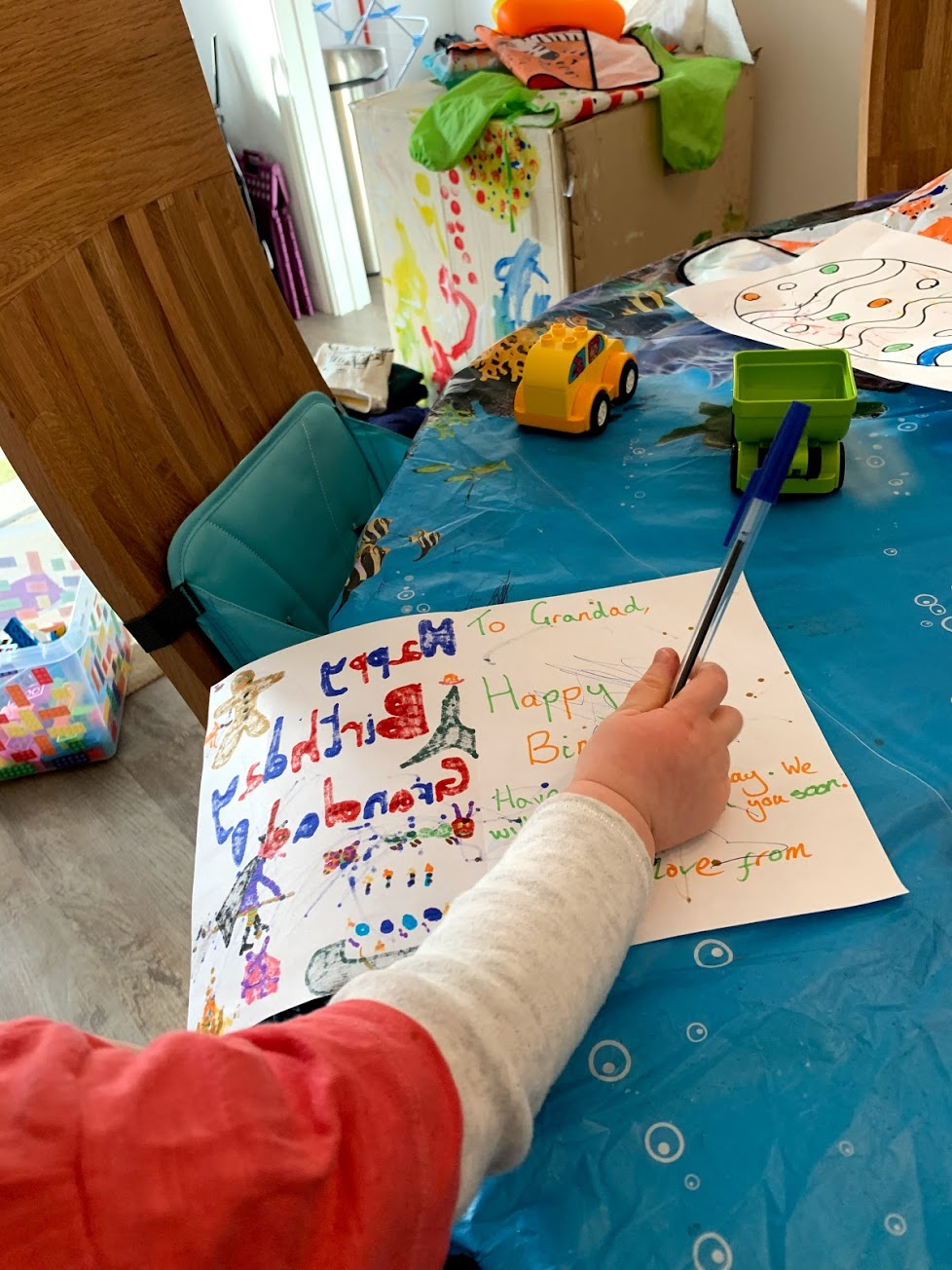
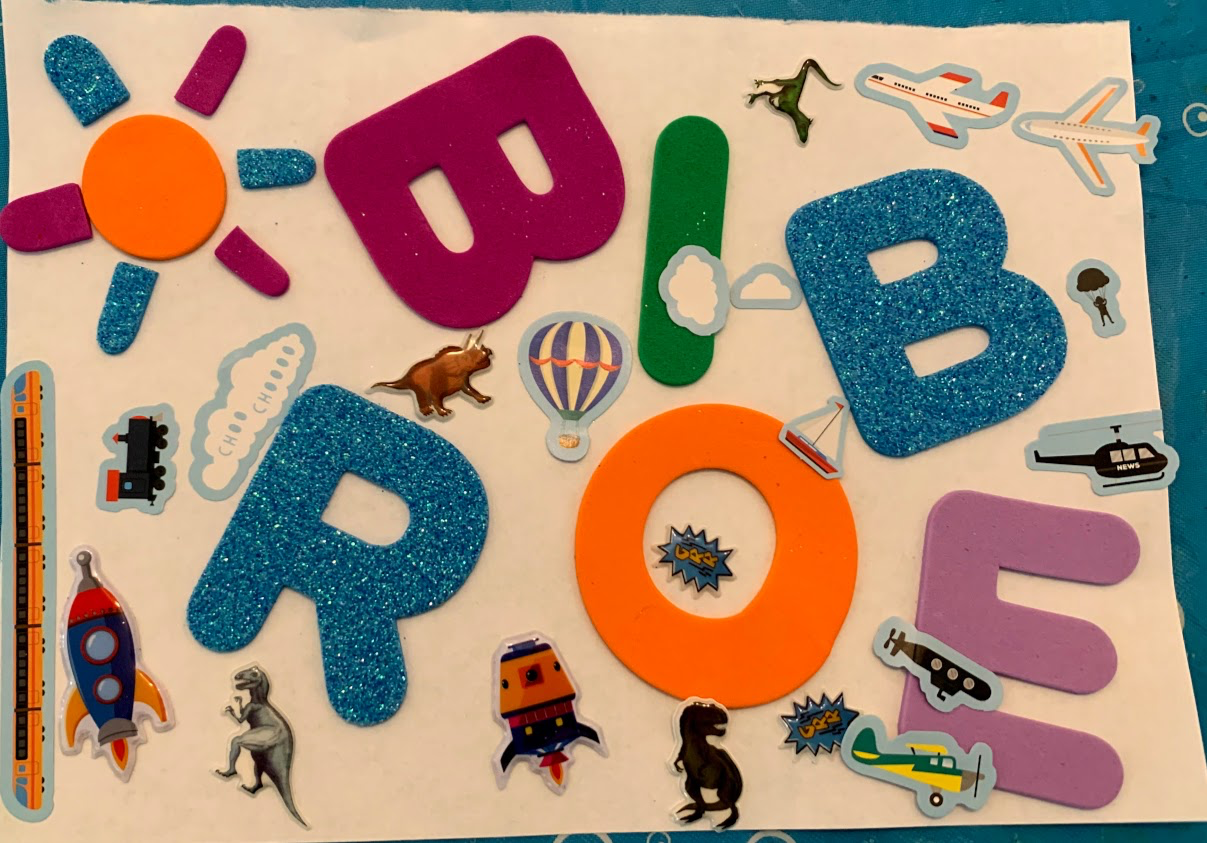
Letters are everywhere which makes it really easy to immerse little ones in learning them. We love to do letter hunts when we are reading stories and mostly focus on the letters in Robbie’s name. We also do this with birthday cards as Robbie loves looking at cards and likes to talk about the letters that he sees on the front of them. We like to take our letter hunts outside when we’re on our walks. We see how many different letters we can find on number plates, shops, road signs etc.
Games
Pairs

This game is great and allows you and your child to develop memory skills, identifying similarities and differences and turn-taking skills. When we play we use a much smaller number of cards to make the game more accessible for Robbie, which also means it’s something that will grow in complexity as he gets older. We talk about each card as we turn them over and discuss what things are the same or different about each card to decide whether we have a matching pair.
Bowling
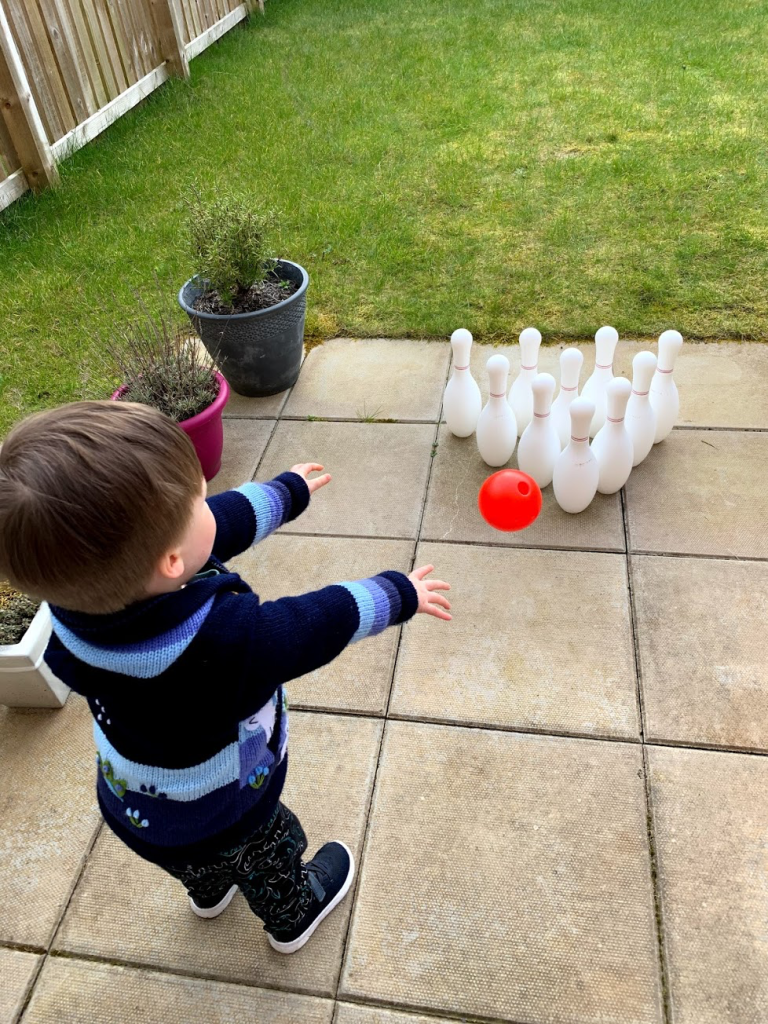
This is great for developing hand/eye coordination, turn-taking skills and fine motor skills. We also like to count the skittles when we are putting them up, count how many fall down, guess how many are left and check. We like to set the skittles up in different shapes and patterns to see which are the easiest to knockdown.
Cars game – Link Here
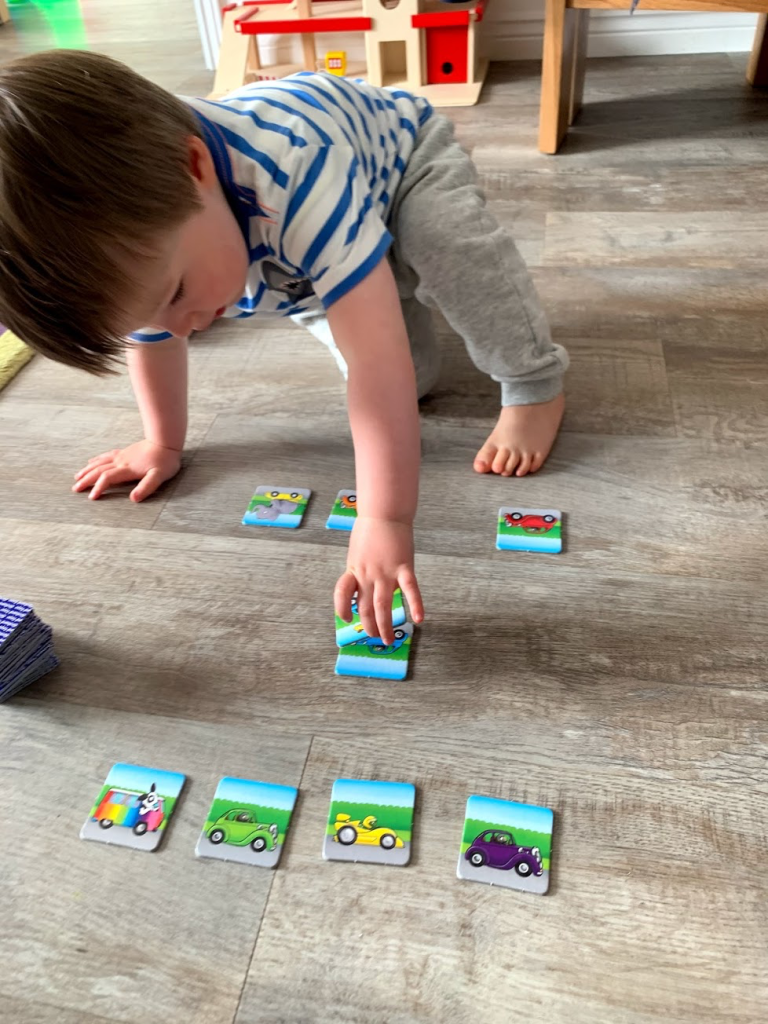
For this game you are given 4 car cards per player, there is a discard pile and an extra card pile. The aim of the game is to get rid of all your cards first, but you have to match your card to the one on top of the discard pile through car colour or the card type (each card type has a different animal driving it which may be an easier concept). This game is great for colour and animal recognition, turn-taking and counting. It also provides a safe space to experience winning and losing.
T.V. Time
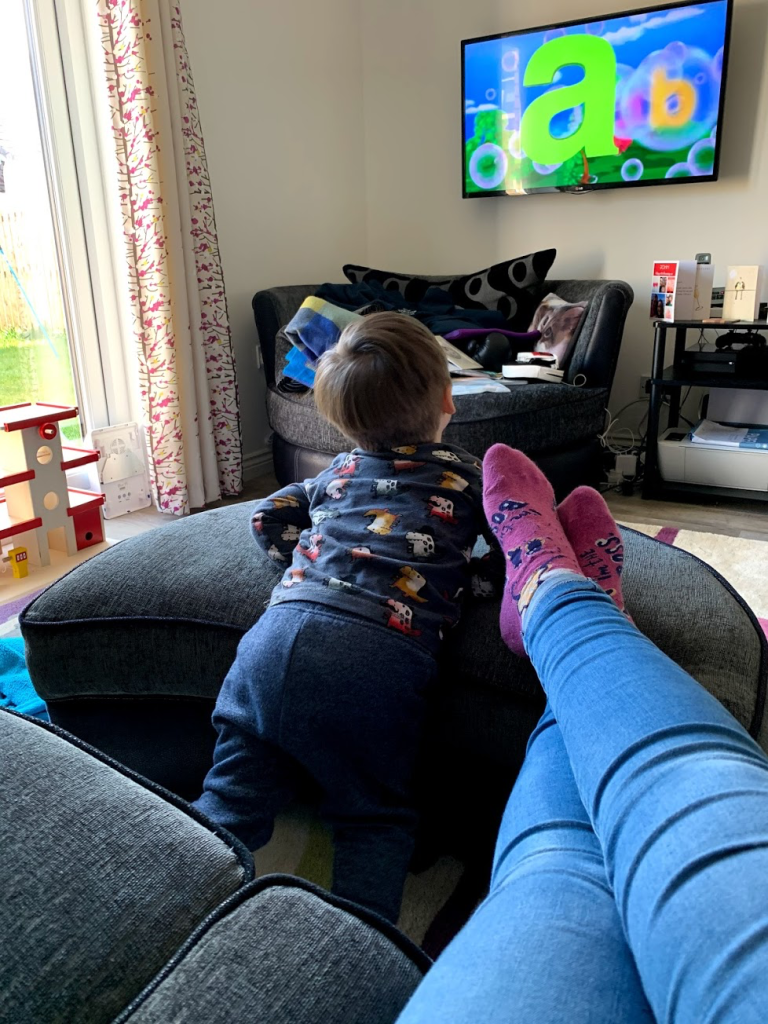
We have never watched a huge amount of TV with Robbie in our house. Each time we do watch TV though I ensure that we watch something worthwhile and that will help Robbie learn. Our favourite programs are Little Baby Bum (youtube or Netflix) – this is a compilation of song videos for counting, alphabet/phonics, daily routine etc, Number Blocks (Iplayer), Alpha Blocks (Iplayer), Kit and Pup (Iplayer) – STEM activities and information, Melody (Iplayer)- music appreciation and imagination, Messy Monster songs (Iplayer)- STEM knowledge and Paw Patrol (Netflix) – helping others, service people that help us etc.
Jigsaws
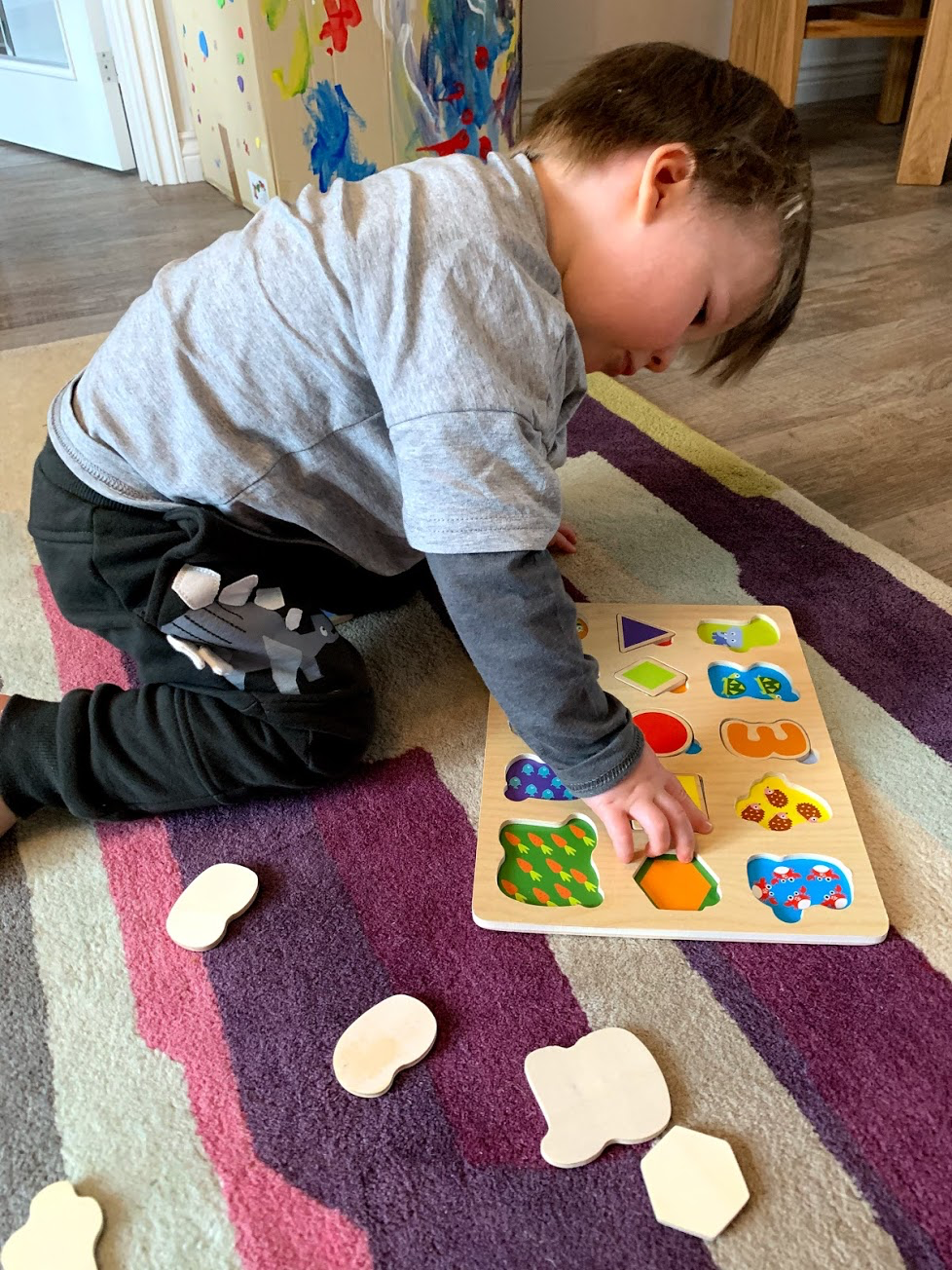
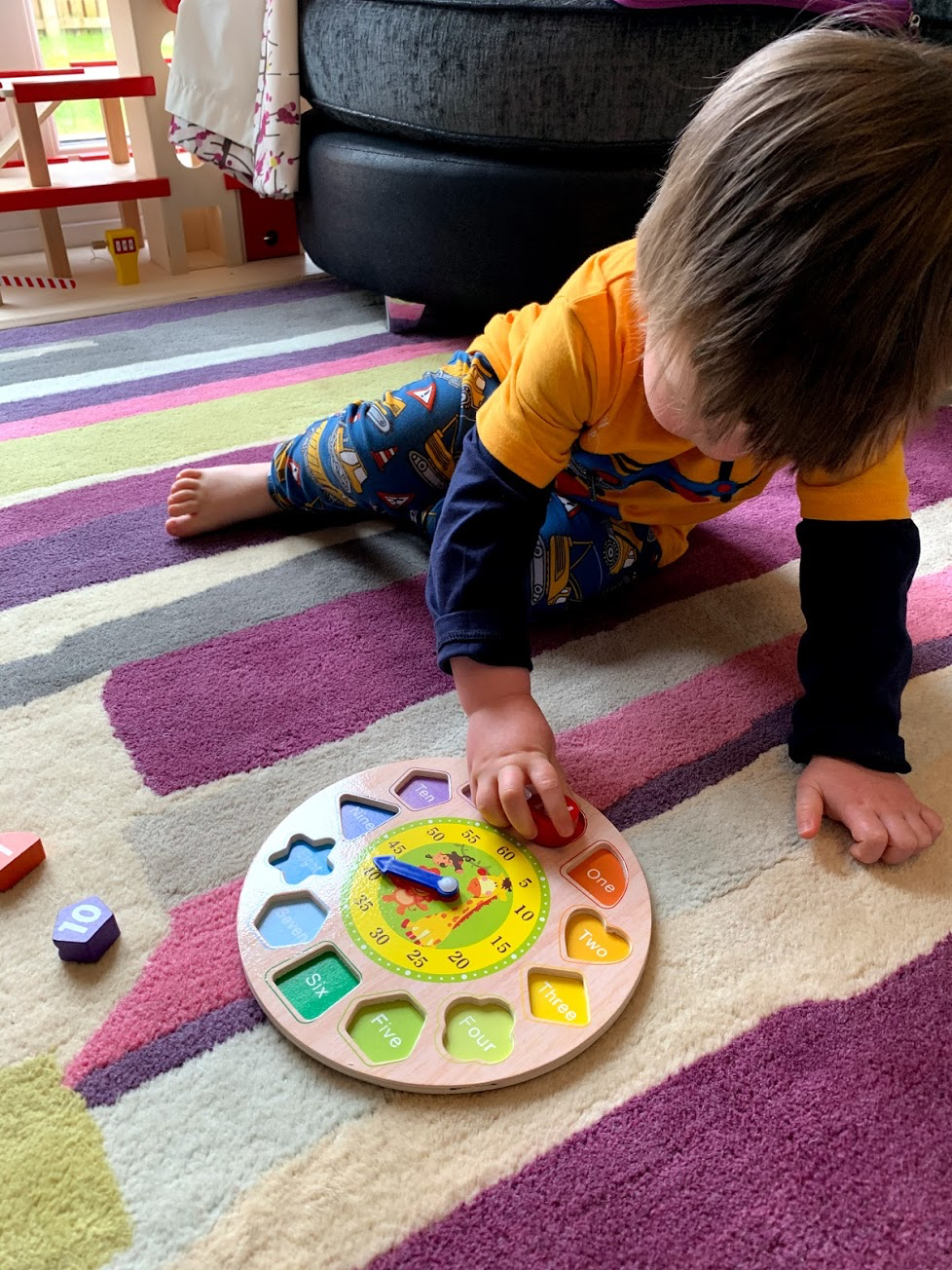
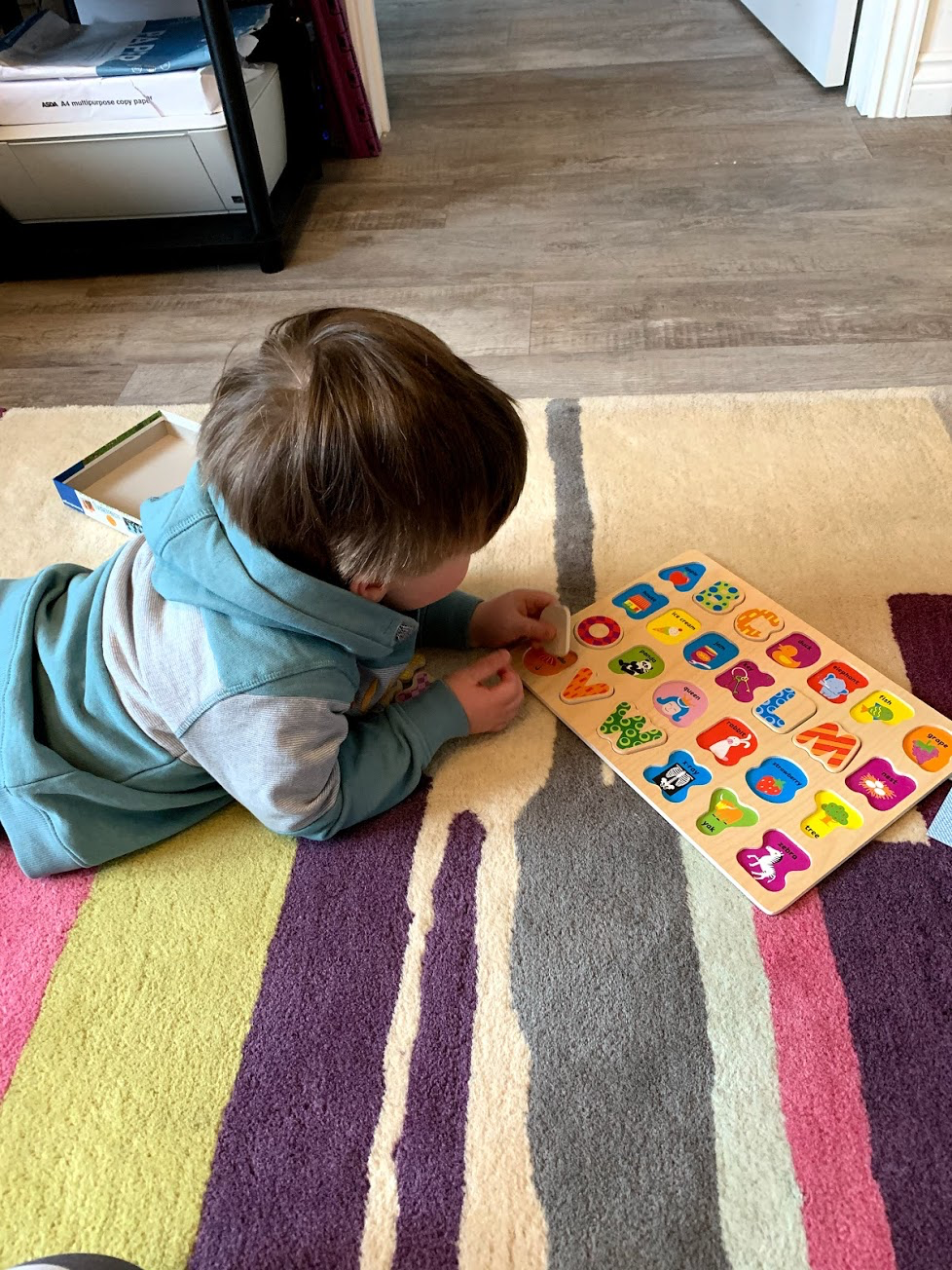
We have some great jigsaws that have numbers, shapes and letters to fit into their spaces. Robbie loves these and loves talking about the names of the shapes and letters, as well as the letter sounds and what picture matches that sound. He loves counting the pictures and matching the correct number to the space and talking about the colours that are used for each piece too. The pieces themselves can be useful. We like to use them for identifying shapes, letters and numbers.
Colour Sorter

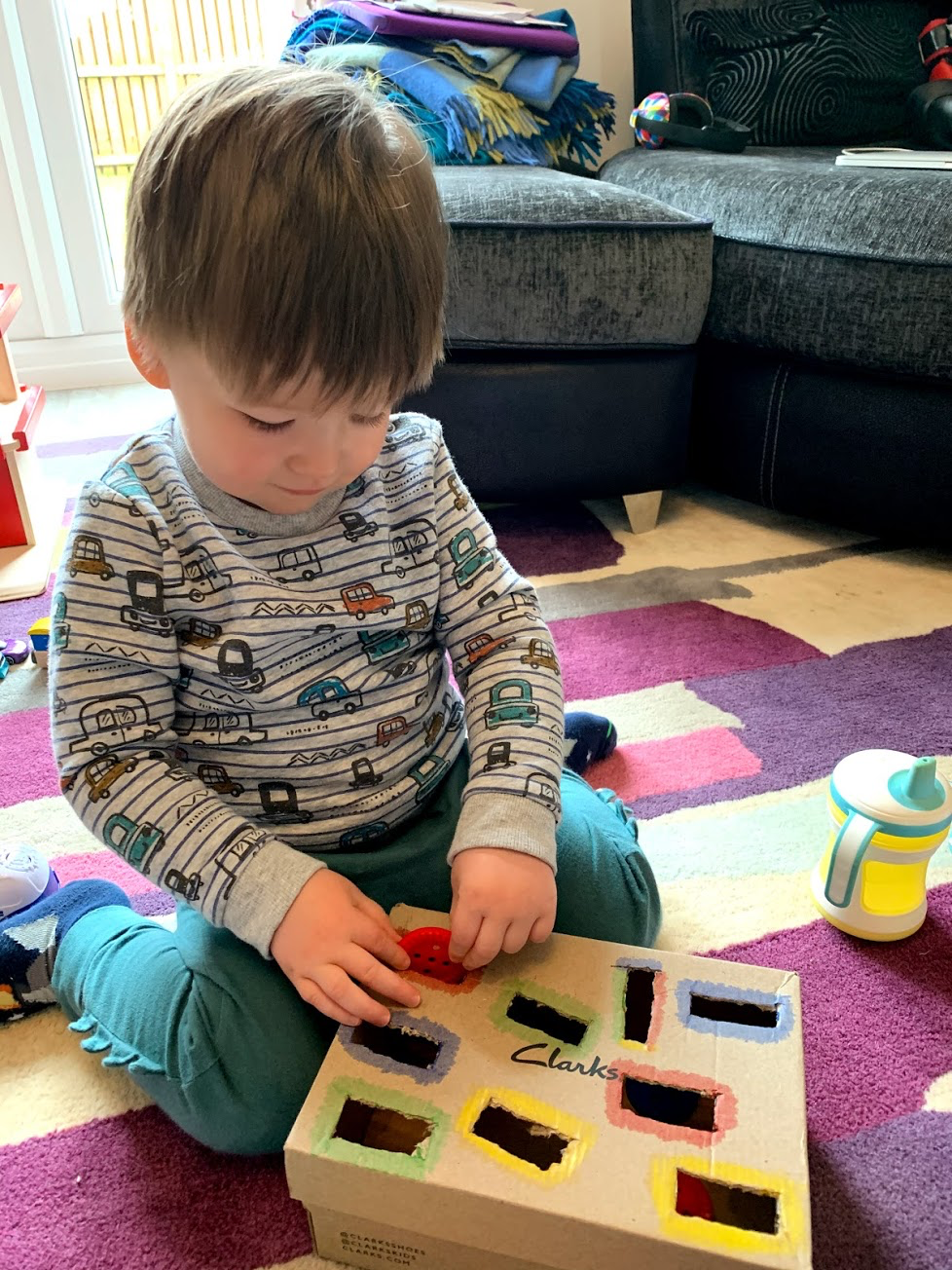
I made this simple colour sorter at the start of lockdown (2020) because Robbie was showing a real interest in colours and would arrange his toy cars into groups of the same colour. I took an empty shoebox, cut some slots in the top using a pair of scissors and coloured around the edge of these with crayon. Robbie could then post his buttons/cars/jigsaw pieces/pens etc. into the correct coloured space. We would talk about the colour of the object he had and which slot it could go into and count how many of each colour was in the box at the end of the activity.
Playdough Stamping with Letters and Numbers
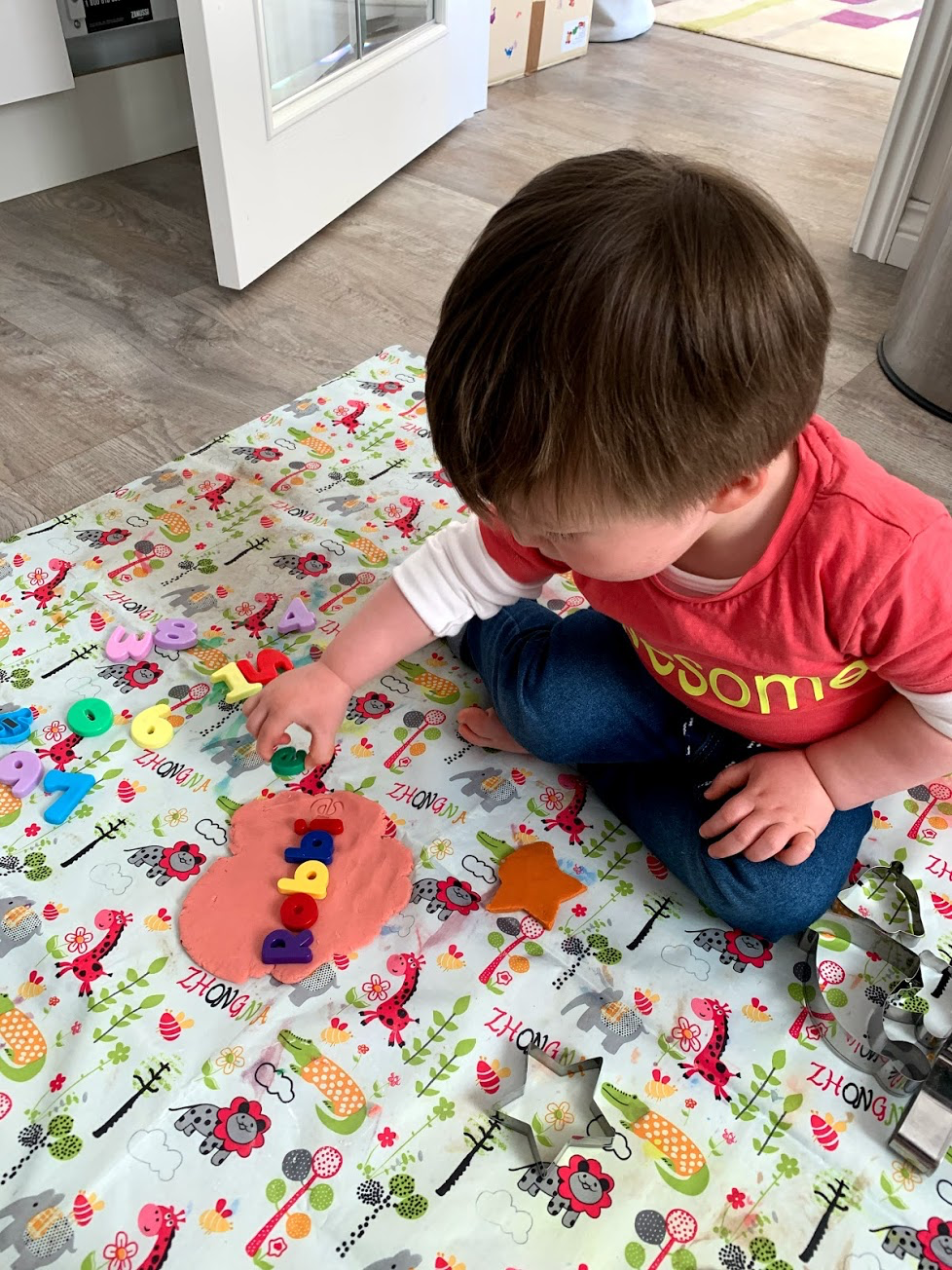

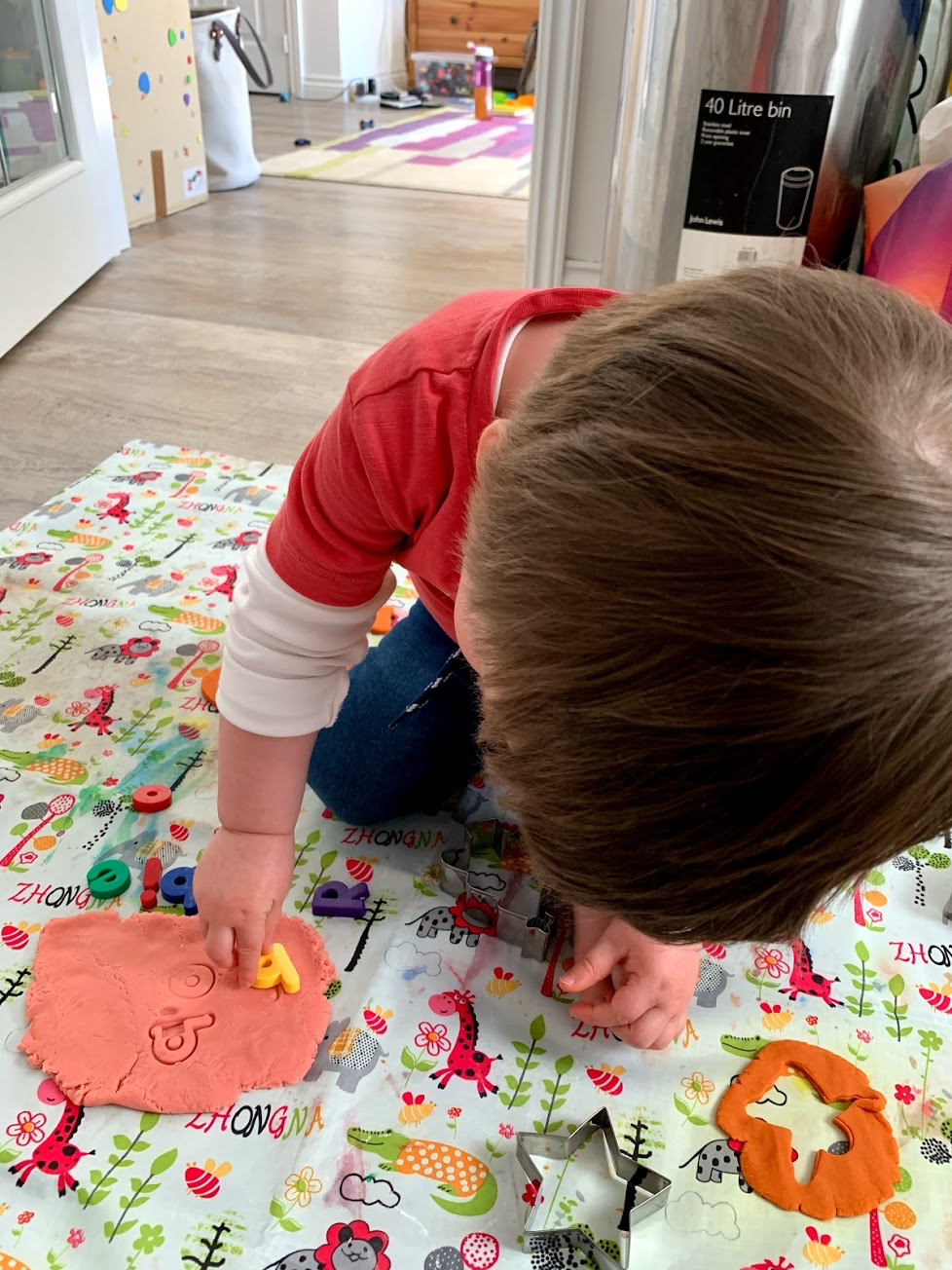
This is a great sensory way to explore letters, numbers and shapes. We used magnetic letters we have on our fridge and mainly focused on the letters in Robbie’s name, adding in additional letters as he showed an interest in them. We also used this to practice recognising numbers past nine as we could stamp the two-digit number into the playdough and Robbie could then see it, identify it and recreate it. Another thing we used playdough for was modelling letters and counting. We would make long pieces of playdough and bend them into the shape of a letter or number or we would make balls or cut out shapes for Robbie to count. We also touched on adding and taking away with this too.
Matching Numbers and Flashcards

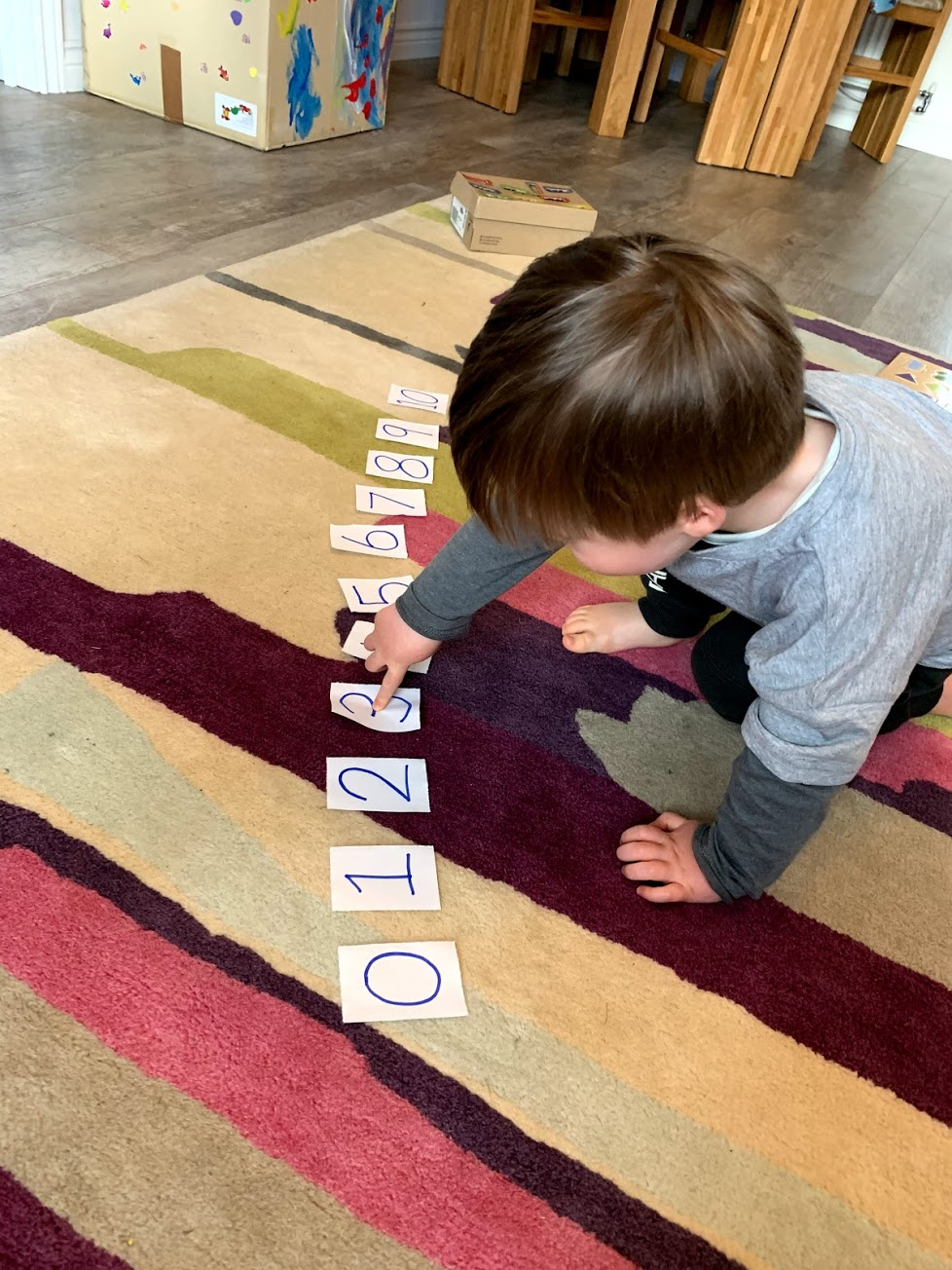
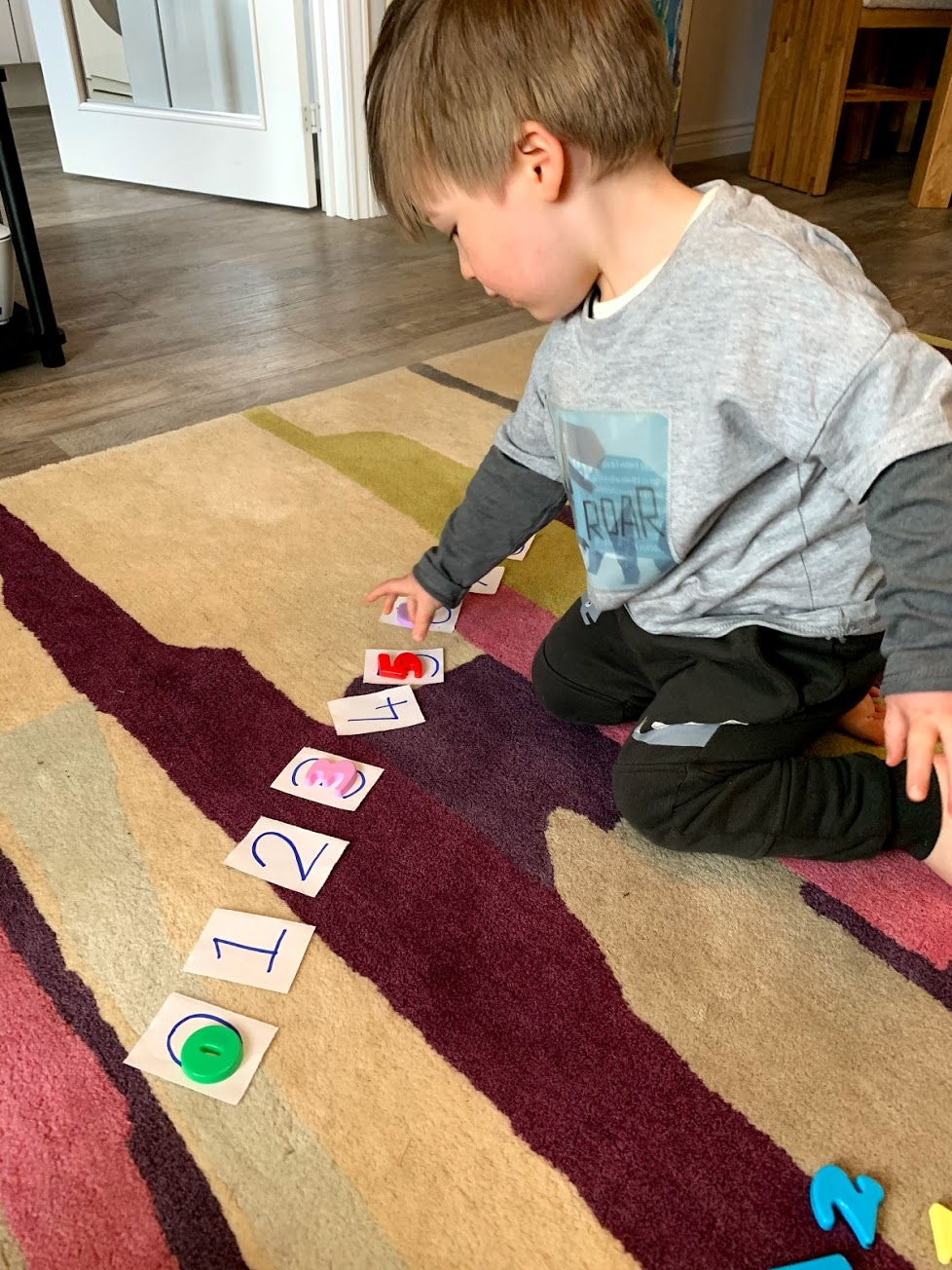
This was a really easy activity to set up with loads of good things to do. I cut some pieces of A4 paper into 10 pieces and wrote numbers 0 to 20 on them. Together we looked at the numbers and put them in the right order. Robbie used this as a number line to count forwards and backwards. We played a number hunt game where I ask him to find a specific number and he either pointed to it or held it up. You can also take a number or a few numbers away and Robbie needed to say which numbers were missing.
We used the magnetic numbers to match with the homemade flashcards. The magnetic numbers can also be used to fill in the space when doing the missing number activity.
Shape Flashcard and Jigsaw Piece Matching
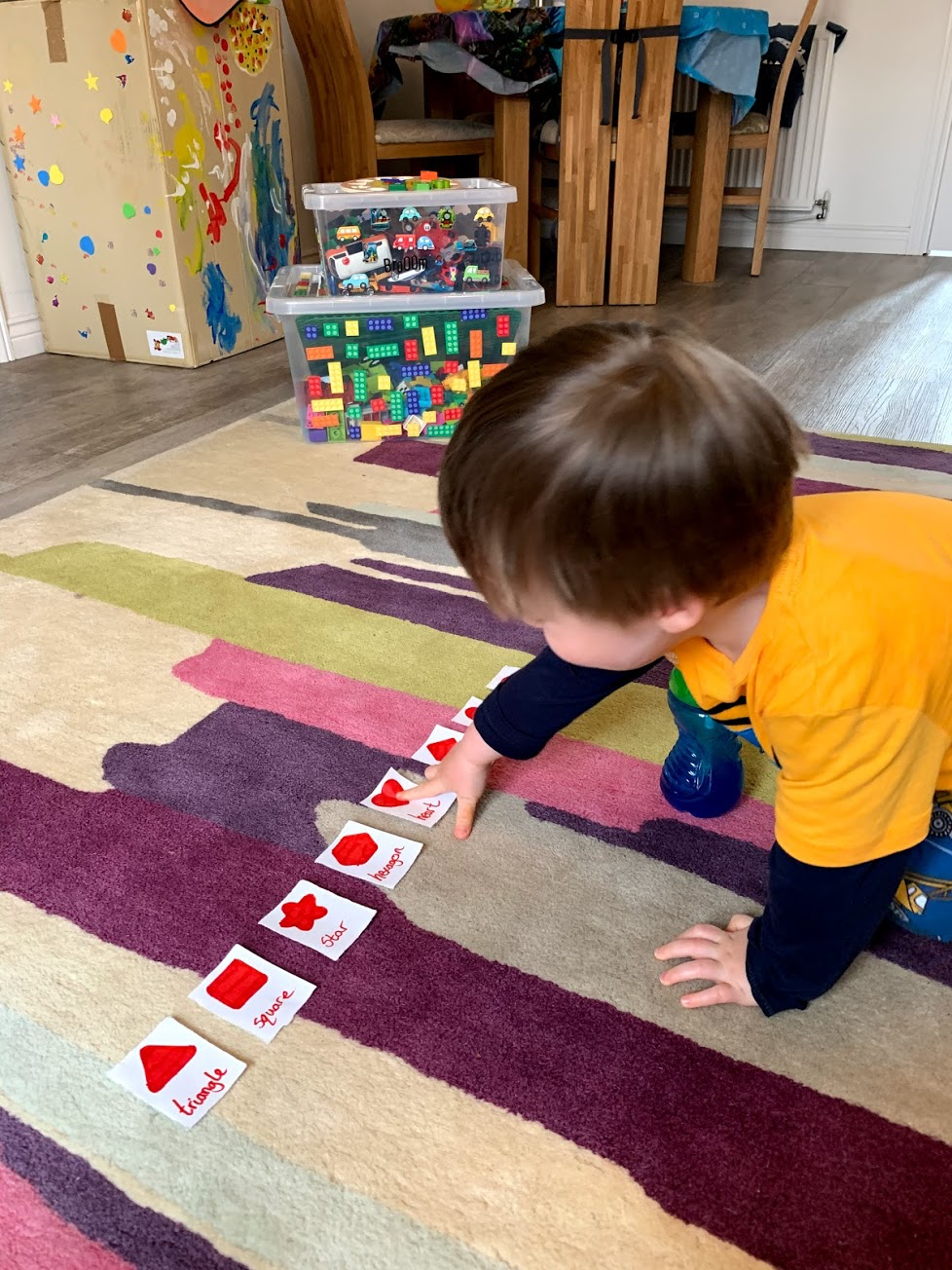

This is another straightforward activity to create. I made the flashcards again by cutting a piece of A4 paper into 10 pieces and then drawing around the puzzle pieces that we had from one of Robbie’s jigsaws and writing the name of the shape underneath. Robbie then identified them in a line, found the shape when I asked him to point to it out of sequence and matched the puzzle piece to the flashcard.
Colour Flashcards and Car Matching
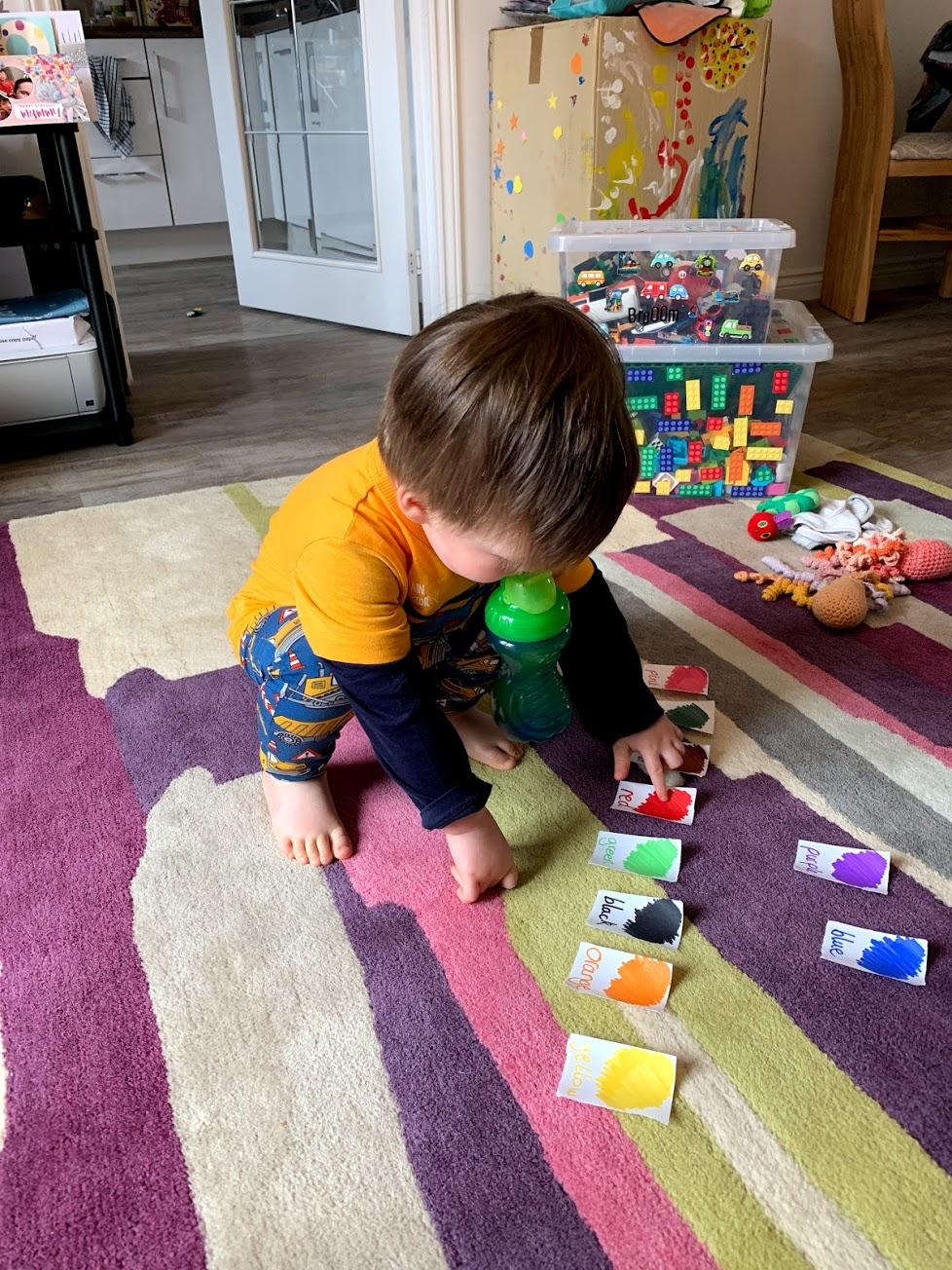
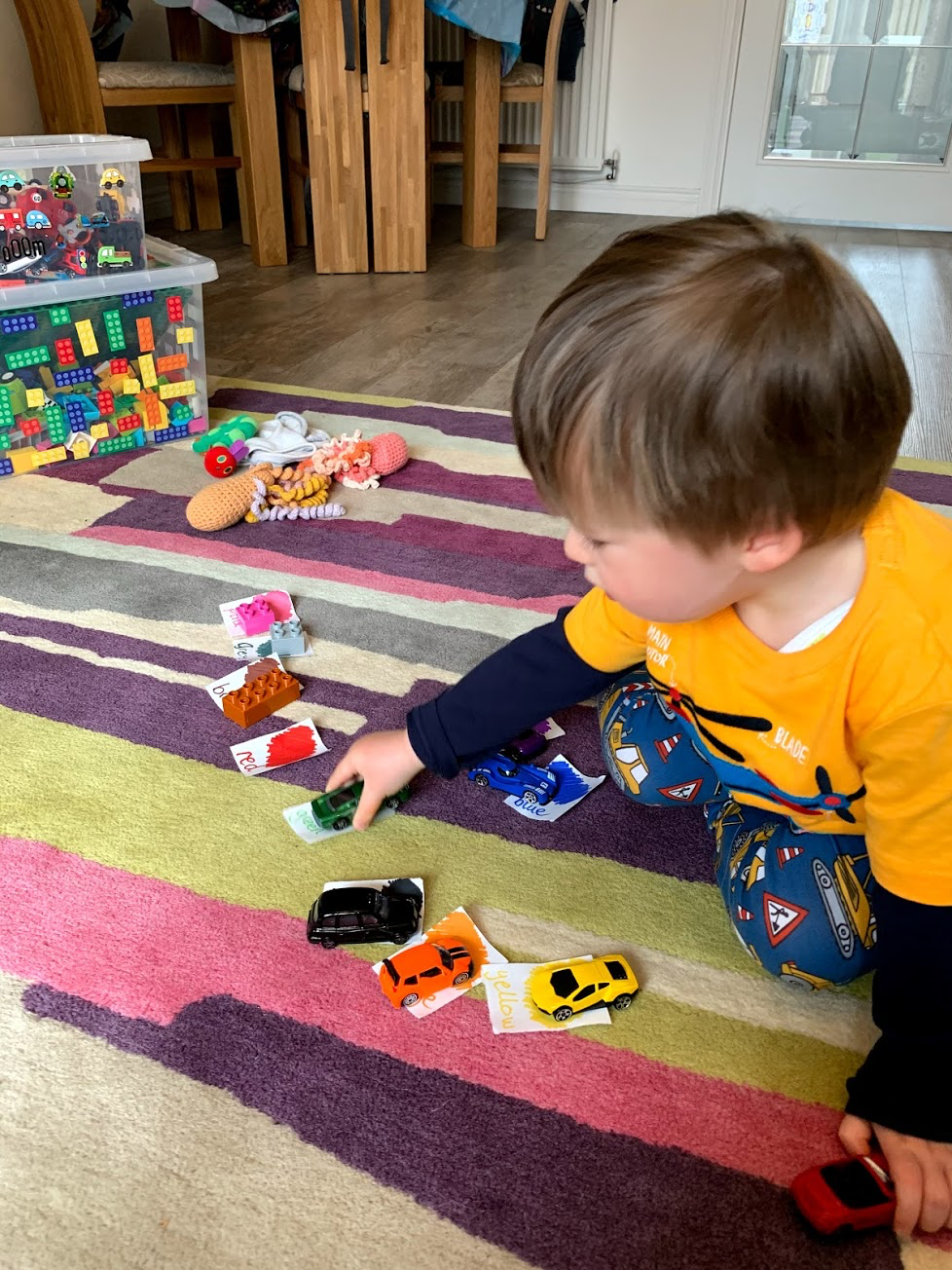
I made these flashcards in the same way as before, cutting an A4 piece of paper into 10 pieces, then colouring a section of the paper and writing the name of the colour underneath. Robbie loves cars so I used this as motivation for this activity. We put the flashcards out on the floor and Robbie identified them all. He then found colours I asked out of sequence and finally matched his cars/blocks to the corresponding flashcard.
Phonics/Alphabet Flashcards
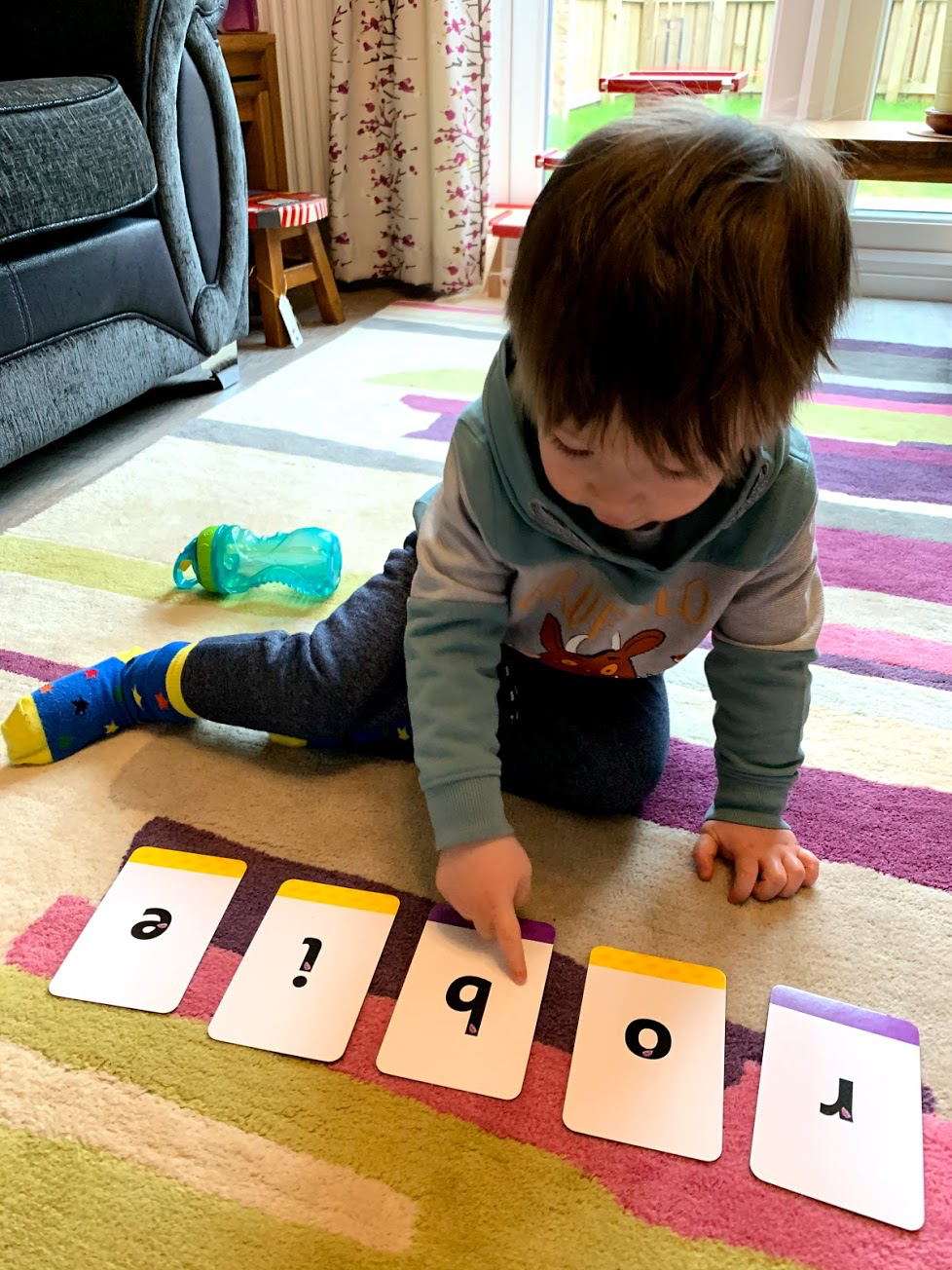
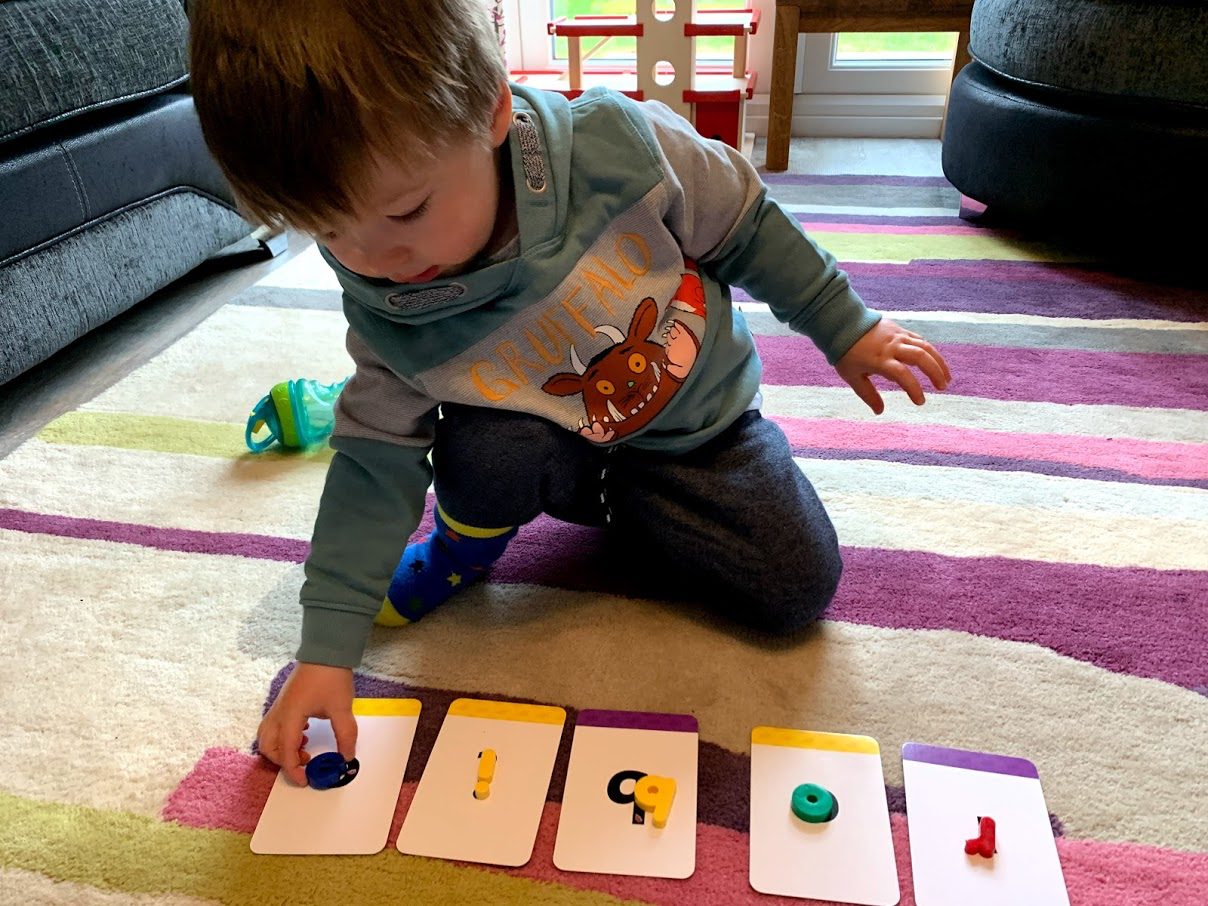
I bought these cards for work a few years ago and used them successfully with my classes to practice spelling, letter formation/identification and sentence structure/story writing. Robbie loves them and wants to get them out to look at and talk about frequently. We use them on their own, where we look at the letters and discuss what their name and sounds are, order them into the alphabet and make words out of them. We also match them with our magnetic letters. Robbie really enjoys using the picture cards to make sentences too and loves the achievement of being able to read the sentences back together.
Colour Sensory/Messy Play
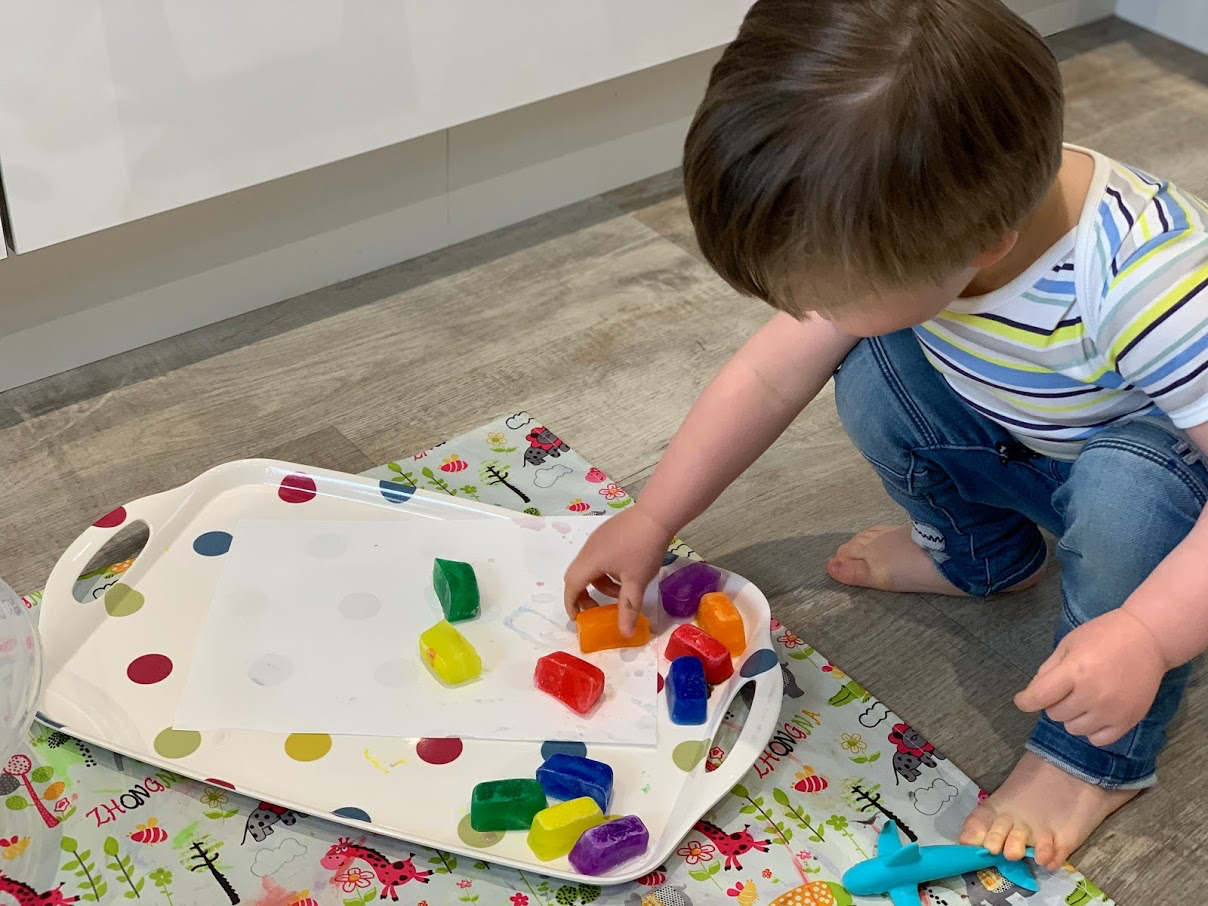
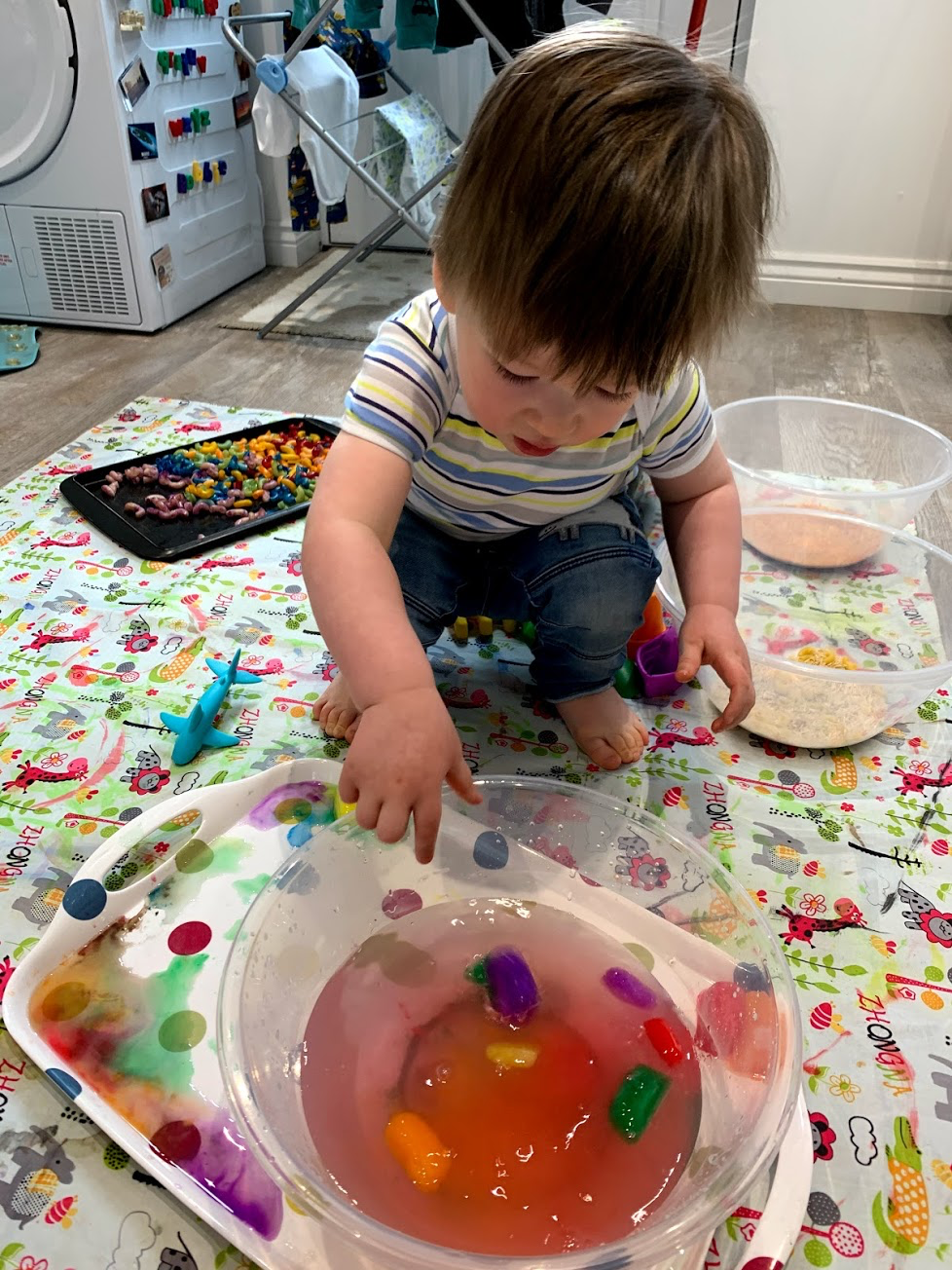
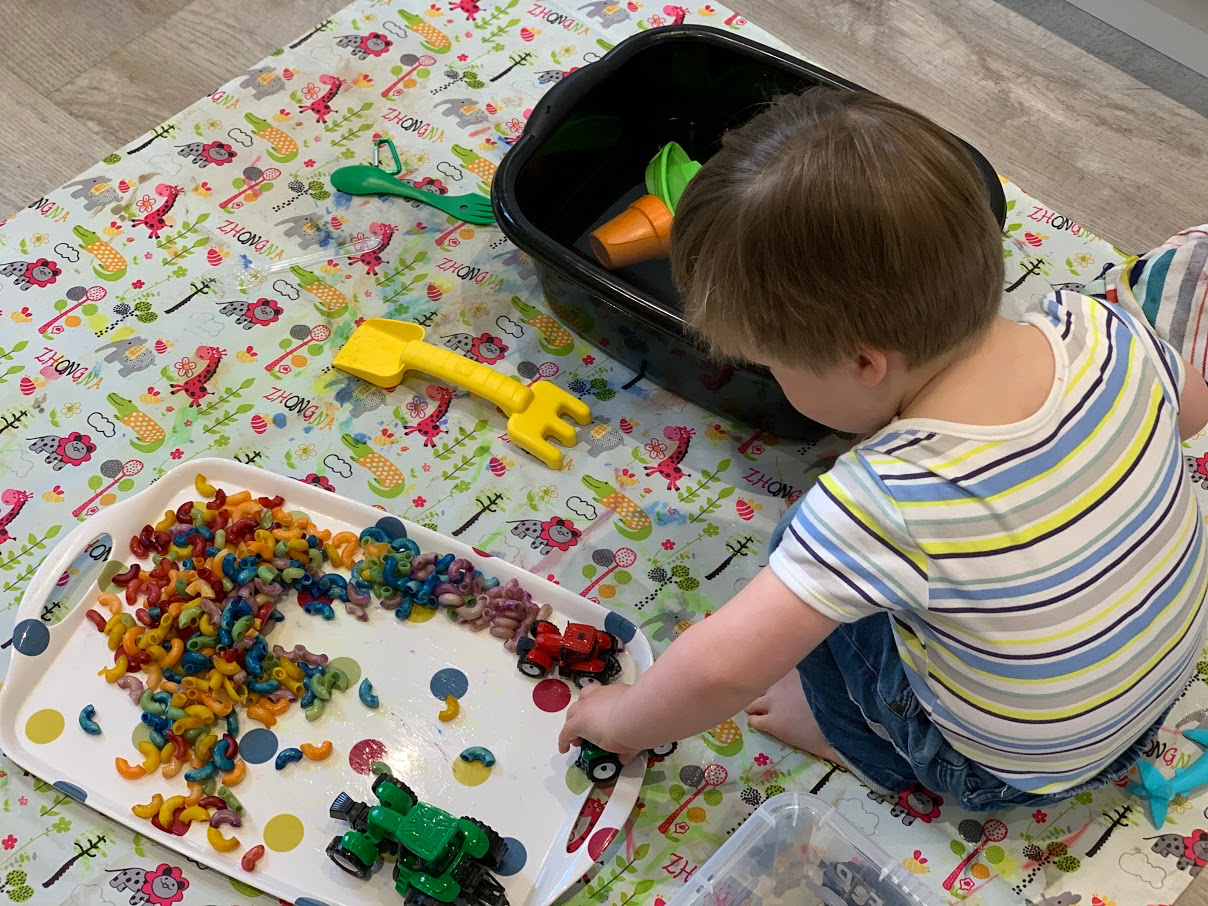
Sensory and messy play are brilliant ways to explore concepts. We spent some time exploring colours this way. We made frozen paint cubes by combining children’s paint and water in ice cube trays and freezing them. We used these to paint on paper and the slabs outside, exploring what happened when the cubes melted and the colours mixed. We also had great fun with colourful pasta made by boiling pasta with food colouring in the water / mixing paint/food colouring with pre-boiled pasta then drying the pasta overnight.

 Thumbs & Crumbs